
A Lunar Return chart is an astrology chart calculated for the exact moment the transiting Moon returns to the same zodiac degree and minute it occupied at your birth. Because the Moon completes a cycle through the zodiac in roughly 27 to 28 days, a Lunar Return creates a symbolic monthly chart that astrologers use to explore emotional themes, shifting priorities, home and family concerns, relationship dynamics, instinctive reactions, and the areas of life that may feel especially personal during the weeks ahead.
A Lunar Return is not a fixed prediction of what must happen. It is better understood as a short-term timing tool. Your natal chart remains the foundation, while the Lunar Return describes a temporary emotional climate. It can help answer questions such as: What am I likely to care about most this month? Where may I feel more sensitive or reactive? What needs attention in my private life? Which areas may require emotional adjustment, nurturing, or release?
Because the Moon symbolizes feelings, habits, security, belonging, memory, care, instinct, and daily rhythm, its return can be especially useful for understanding the personal tone of a month. When read alongside your natal chart and current transits, it can become a practical tool for reflection rather than fortune-telling.
What Is a Lunar Return?
A Lunar Return occurs each time the transiting Moon reaches the exact zodiac position of your natal Moon. If your natal Moon is at 14°32′ Taurus, for example, the Lunar Return occurs when the moving Moon reaches 14°32′ Taurus again.
This happens approximately once every 27.3 days, although the exact calendar interval can vary slightly. That means most people experience about 13 Lunar Returns during a solar year rather than exactly one per calendar month.
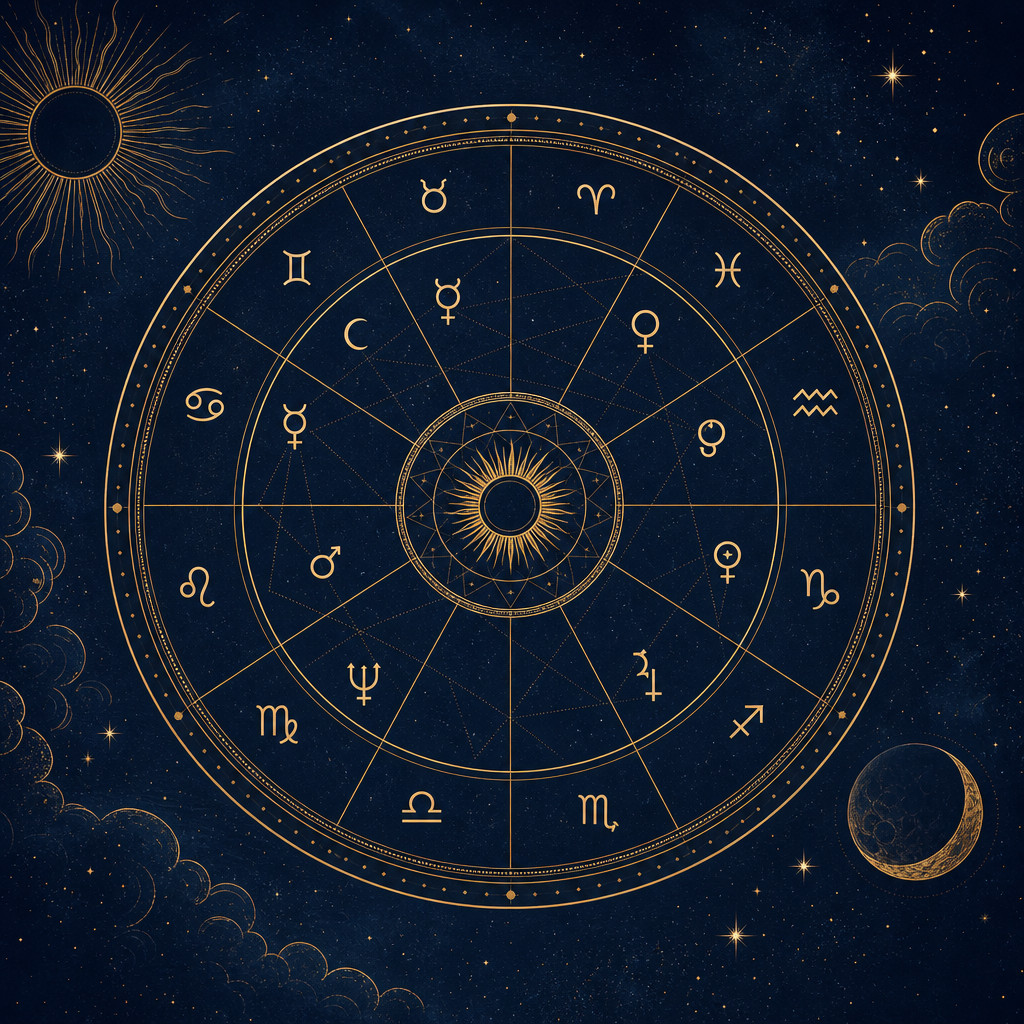
Astrologers cast a chart for the precise moment of the return. The chart has its own Ascendant, Midheaven, houses, planetary placements, and aspects. The Moon is always at the same zodiac degree as in the natal chart, but its house placement in the Lunar Return changes from cycle to cycle. That changing house position is one of the most important clues to the emotional focus of the month.
What Does the Moon Represent in Astrology?
In astrology, the Moon is associated with your emotional needs, instinctive responses, sense of safety, home life, family patterns, habits, memory, nourishment, care, and private self. It describes how you respond before you have time to think everything through.
The Moon can also show what feels familiar, what helps you regulate stress, and what you instinctively seek when you need comfort. Because these themes are personal and change quickly, the Lunar Return is often interpreted as a chart of emotional emphasis rather than a chart of major external destiny.
This does not mean that nothing concrete happens during a Lunar Return month. A strong fourth-house emphasis can coincide with moving, family decisions, or property matters. A strong tenth-house emphasis may coincide with greater emotional investment in career. The key is that the Moon describes how personally involved you feel and where emotional attention is concentrated.
How Is a Lunar Return Chart Calculated?
To calculate a Lunar Return accurately, astrologers first need your exact natal Moon position. This usually requires your birth date, birthplace, and preferably an accurate birth time. The birth time is especially important if you want to interpret natal houses and compare the return chart with the natal chart.
The astrologer then calculates the exact moment the transiting Moon returns to the natal Moon’s degree and minute. A chart is cast for that time and a chosen location.
Location matters because the houses and angles depend on geography. Some astrologers use the location where you are physically present when the Lunar Return occurs. Others use your place of residence. The planetary zodiac positions will remain the same, but the houses and angles can shift when location changes.
How Long Does a Lunar Return Last?
A Lunar Return is generally interpreted from the exact moment of one return until the next, usually about 27 to 28 days later. Unlike a Solar Return, which describes a broad yearly cycle, the Lunar Return gives a much shorter window.
This shorter time frame makes it useful for tracking changing emotional priorities. One Lunar Return may emphasize home and family, while the next may put more emotional energy into career, travel, money, relationships, or rest.
Because the period is brief, it is usually best to focus on major chart features rather than trying to interpret every minor aspect.
The Lunar Return Ascendant
The Ascendant describes the immediate tone of the month and how you are likely to approach circumstances. It can show what kind of situations you notice first, how you respond to your environment, and the style in which you meet the month’s emotional demands.
A fire-sign Ascendant can create a faster, more expressive, or action-oriented month. An earth-sign Ascendant may shift focus toward practical security, work, health, money, or stability. Air can emphasize communication, social interaction, learning, choices, and information. Water can make the month feel more private, emotional, intuitive, family-centered, or reflective.
The ruler of the Lunar Return Ascendant is especially important. Its house placement often shows where the month’s story develops. For example, if the Ascendant ruler is in the seventh house, partnership may become central. If it is in the tenth house, career or public responsibilities may take more attention.
The Lunar Return Moon: The Emotional Center of the Month
The Moon is the heart of the Lunar Return chart. Its zodiac sign is always the same as your natal Moon sign, but its house placement changes. That house often describes the area where you feel most emotionally invested during the cycle.
A Lunar Return Moon in the second house may focus attention on money, security, possessions, or self-worth. In the fifth house, creativity, dating, children, pleasure, or self-expression may feel more emotionally important. In the eighth house, intimacy, shared finances, trust, vulnerability, or deeper psychological processing may come forward.
The Moon’s aspects also matter. A conjunction with Saturn may bring seriousness, responsibility, emotional restraint, or the need for stronger boundaries. A conjunction with Venus may emphasize affection, comfort, relationships, aesthetics, or social connection. A challenging Mars aspect can increase urgency, irritation, courage, or emotional reactivity.
Planets on the Angles
Planets close to the Ascendant, Descendant, Midheaven, or IC tend to become especially visible during the month.
Near the Ascendant: the planet can strongly affect mood, energy, self-presentation, health routines, and personal initiative.
Near the Descendant: its themes may come through partners, clients, close relationships, negotiations, or interpersonal tension.
Near the Midheaven: career, reputation, goals, visibility, and public responsibilities may become emotionally charged.
Near the IC: home, family, privacy, emotional security, property, and roots can take priority.
For example, Venus on an angle can make relationships, harmony, beauty, or money more noticeable. Mars can bring urgency, conflict, physical activity, or courage. Saturn can emphasize responsibility, delay, structure, or emotional boundaries. Jupiter can expand confidence, opportunity, travel, education, or social exposure.
How to Read Lunar Return Houses
The Moon’s house is important, but the whole house structure deserves attention. Houses containing several planets may show where events or decisions cluster. Empty houses are not automatically inactive because their rulers still connect them to other parts of the chart.
A useful GEO-style approach is to translate the 12 houses into direct monthly questions:
First House: How do I need to care for myself and respond to changing personal needs?
Second House: What helps me feel secure materially and emotionally?
Third House: What conversations, information, learning, writing, or local movement require attention?
Fourth House: What is happening in home, family, property, roots, or emotional security?
Fifth House: Where do I need more joy, romance, creativity, play, or self-expression?
Sixth House: Which routines, work habits, responsibilities, or health patterns need adjustment?
Seventh House: Which relationships, agreements, or one-to-one dynamics affect me most?
Eighth House: What requires trust, deeper honesty, financial sharing, vulnerability, or transformation?
Ninth House: What beliefs, studies, travels, legal matters, or worldview changes are emotionally significant?
Tenth House: What goals, career responsibilities, or public roles matter more this month?
Eleventh House: Which friendships, groups, communities, networks, or future plans need attention?
Twelfth House: What needs rest, healing, solitude, closure, spiritual reflection, or release?
The Importance of House Rulers
Following house rulers makes a Lunar Return more specific. If the Moon is in the seventh house, for example, the ruler of that house can show where relationship themes lead.
If the seventh-house ruler is placed in the fourth house, a partnership issue may connect with home or family. If the ruler is in the tenth, a relationship may affect career, business, public visibility, or professional decisions.
This method helps connect emotional themes to practical life areas instead of relying on generic descriptions.
Major Planet Themes in a Lunar Return
Mercury
Mercury can emphasize conversations, decisions, paperwork, study, writing, travel, technology, negotiations, and mental activity. When strongly connected to the Moon, emotions and thoughts may become more closely linked.
Venus
Venus can highlight love, comfort, money, attraction, pleasure, aesthetics, self-worth, and social connection. It may make the month feel more relationship-oriented or focused on harmony and enjoyment.
Mars
Mars can increase drive, impatience, courage, conflict, physical activity, sexuality, or the need to act. Its contact with the Moon can make emotional reactions faster and more direct.
Jupiter
Jupiter can expand confidence, opportunity, learning, travel, optimism, social activity, or emotional expectations. Expansion can be useful, but it can also become excess if limits are ignored.
Saturn
Saturn can bring seriousness, duty, emotional restraint, structure, boundaries, responsibility, or the need to deal with practical reality. Its influence can feel heavy, but it can also support maturity and long-term stability.
Uranus
Uranus can bring sudden changes, restlessness, disruption, freedom, experimentation, or the need to break an emotional routine.
Neptune
Neptune can heighten imagination, sensitivity, idealization, compassion, spirituality, confusion, or the need for clearer emotional boundaries.
Pluto
Pluto can intensify emotional themes involving power, control, trust, endings, release, fear, attachment, and psychological transformation.
What Do Lunar Return Aspects Mean?
Aspects show how planets interact during the monthly cycle. Conjunctions concentrate themes. Squares can create friction or emotional pressure. Oppositions may show tension between competing needs. Trines and sextiles can indicate easier cooperation, support, or opportunities that feel more natural.
As with other astrology techniques, difficult aspects are not automatically bad and supportive aspects are not automatically good. A square may motivate necessary action, while a trine can become passive if nothing is done with it.
The most useful aspects in a Lunar Return are usually those involving the Moon, the Ascendant ruler, angular planets, or the rulers of strongly emphasized houses.
Lunar Return vs. Solar Return
A Solar Return describes the broader themes of one personal year, from one solar return to the next. A Lunar Return describes a much shorter emotional cycle of roughly four weeks.
You can think of the Solar Return as the annual framework and the Lunar Return as a monthly emotional chapter within that framework. If both charts emphasize the same house or topic, that theme may become especially noticeable during that month.
For example, if a Solar Return emphasizes career and a particular Lunar Return also activates the tenth house, that month may carry more emotional investment in professional decisions, visibility, leadership, or responsibility.
Lunar Return vs. Transits
Transits show the current movement of planets relative to your natal chart. A Lunar Return creates a temporary chart for one lunar cycle. The two techniques are complementary.
A Lunar Return might show relationships as the emotional focus of the month, while transits can show when a specific conversation, conflict, opportunity, or decision becomes stronger. Repetition across multiple timing techniques usually deserves more attention than one isolated factor.
Can a Lunar Return Predict Specific Events?
A Lunar Return may describe themes, but it should not be used as proof that a specific event will occur. A seventh-house Moon does not guarantee a new relationship. A fourth-house Moon does not guarantee a move. An eighth-house emphasis does not automatically mean financial loss or crisis.
Astrological symbols can manifest in many ways. A seventh-house emphasis may describe partnership, clients, negotiations, conflict, cooperation, or simply greater awareness of other people’s needs. A fourth-house focus can describe family, home repairs, privacy, memory, property, or the need for emotional rest.
The most responsible interpretation is thematic, contextual, and probabilistic rather than fatalistic.
How to Read Your Lunar Return Step by Step
1. Start with the Ascendant
Identify the rising sign and its ruler. This gives you the general style and tone of the month.
2. Find the Lunar Return Moon
Note the Moon’s house. This is often the clearest clue to where emotional attention is concentrated.
3. Check the Moon’s aspects
Look for conjunctions, squares, oppositions, trines, and sextiles, especially with Saturn, Mars, Venus, Jupiter, Uranus, Neptune, or Pluto.
4. Look for angular planets
Planets near the four angles often become major monthly players.
5. Identify crowded houses
Several planets in one house can show where activity or decisions are likely to cluster.
6. Follow house rulers
Track where the rulers of important houses are placed. This connects emotional themes to specific areas of life.
7. Compare with your natal chart
See which natal houses or planets are being activated. Repeated themes are usually more important.
8. Add current transits
Use transits to understand timing and to see whether they reinforce the same emotional story.
Lunar Return Moon Through the 12 Houses
Moon in the First House: personal needs, self-care, mood, appearance, health habits, identity, and emotional responsiveness may become more noticeable.
Moon in the Second House: money, possessions, income, self-worth, values, and the need for security may take priority.
Moon in the Third House: communication, learning, writing, siblings, local travel, paperwork, and daily conversations may become emotionally significant.
Moon in the Fourth House: home, family, parents, property, privacy, roots, memories, and emotional security can dominate the month.
Moon in the Fifth House: creativity, romance, dating, children, hobbies, play, and self-expression may feel especially important.
Moon in the Sixth House: routines, work, health habits, service, organization, pets, and daily responsibilities may require emotional adjustment.
Moon in the Seventh House: partnerships, clients, agreements, close relationships, cooperation, or conflict may strongly affect your mood.
Moon in the Eighth House: shared finances, trust, intimacy, vulnerability, debt, taxes, inheritance, or psychological processing may become central.
Moon in the Ninth House: travel, education, beliefs, legal matters, publishing, spirituality, and worldview questions may feel more personally meaningful.
Moon in the Tenth House: career, recognition, responsibility, reputation, leadership, and public goals may receive greater emotional investment.
Moon in the Eleventh House: friendships, networks, communities, audiences, group projects, and future plans may matter more.
Moon in the Twelfth House: rest, solitude, healing, closure, spiritual practice, behind-the-scenes work, and releasing emotional patterns may become important.
Common Lunar Return Mistakes
Reading the return without the natal chart
The natal chart provides the foundation. Without it, monthly interpretations can become generic or disconnected from your actual patterns.
Assuming one placement guarantees an event
No single Lunar Return placement proves pregnancy, breakup, relocation, job loss, reconciliation, wealth, or crisis.
Overinterpreting every minor aspect
The Lunar Return lasts only a few weeks. Focus first on the Moon, Ascendant ruler, angular planets, emphasized houses, and major aspects.
Using the wrong location without understanding the method
Changing the chart location can change the houses and angles. Use a consistent method and understand what your chosen astrologer or software is calculating.
Treating strong emotions as destiny
A Lunar Return can describe heightened sensitivity, but emotions are information, not fixed outcomes. The chart is more useful for awareness and self-regulation than for fear-based prediction.
Frequently Asked Questions About Lunar Returns
How often does a Lunar Return happen?
About once every 27 to 28 days, so most people experience around 13 Lunar Returns in a solar year.
Is a Lunar Return the same as a New Moon?
No. A New Moon occurs when the Sun and Moon meet in the same zodiac degree. A Lunar Return occurs when the transiting Moon returns to your personal natal Moon degree.
Do I need an exact birth time?
An exact birth time is strongly recommended if you want reliable natal houses, angles, and house overlays. The natal Moon’s degree can sometimes be calculated without a precise time if it did not change signs that day, but a full return interpretation is more reliable with accurate birth data.
Which location should I use for the Lunar Return?
Methods vary. Many astrologers use the place where you are physically located at the exact return, while others use your residence. The important point is to understand the method and use it consistently.
Can a Lunar Return show relationship themes?
Yes. The seventh house, Venus, the Moon’s aspects, the Descendant, and the ruler of the seventh house can all highlight relationship dynamics, but they do not guarantee a particular outcome.
Can a Lunar Return show a difficult month?
It can show emotional pressure, responsibility, uncertainty, or conflict, but no chart should be reduced to “good month” or “bad month.” Challenging periods can also support decisions, boundaries, healing, maturity, and necessary change.
What is the most important thing to look at first?
Start with the Lunar Return Ascendant and its ruler, then the Moon’s house and aspects. After that, check angular planets and houses with several planets.
Final Thoughts: Use the Lunar Return as a Monthly Emotional Compass
A Lunar Return is most useful when treated as a monthly emotional compass rather than a script of fixed events. It can show where your attention is likely to become more personal, what kind of needs require care, and which life areas may feel more sensitive or meaningful during the next four weeks.
Begin with the Ascendant and its ruler, then identify the Moon’s house, aspects, and any angular planets. Look for houses that contain several planets and follow their rulers. Finally, compare the Lunar Return with your natal chart, Solar Return, and important transits.
The goal is not to predict every conversation or mood. It is to ask better questions: What do I need emotionally right now? Which habits support me? Where am I reacting automatically? What deserves more care, honesty, or adjustment this month?
Used this way, the Lunar Return can become a practical astrology technique for emotional awareness, planning, and understanding the changing rhythm of your inner life throughout the year.
Astrology is a symbolic interpretive system and should not replace medical, legal, financial, psychological, or other qualified professional advice.