

Quick answer: The Descendant, often abbreviated DSC, is the point directly opposite the Ascendant in a birth chart. It marks the cusp of the 7th house in many house systems and symbolizes the qualities you encounter, seek, project, or learn through one-to-one relationships. The Descendant is strongly associated with romantic partnerships, marriage, business partnerships, contracts, clients, open rivals, and the broader question of how you relate to other people as equals. Your Descendant sign does not describe a single “ideal partner.” Instead, it shows a relationship style, a set of interpersonal lessons, and qualities that become especially important through close partnership.
What Is the Descendant in Astrology?
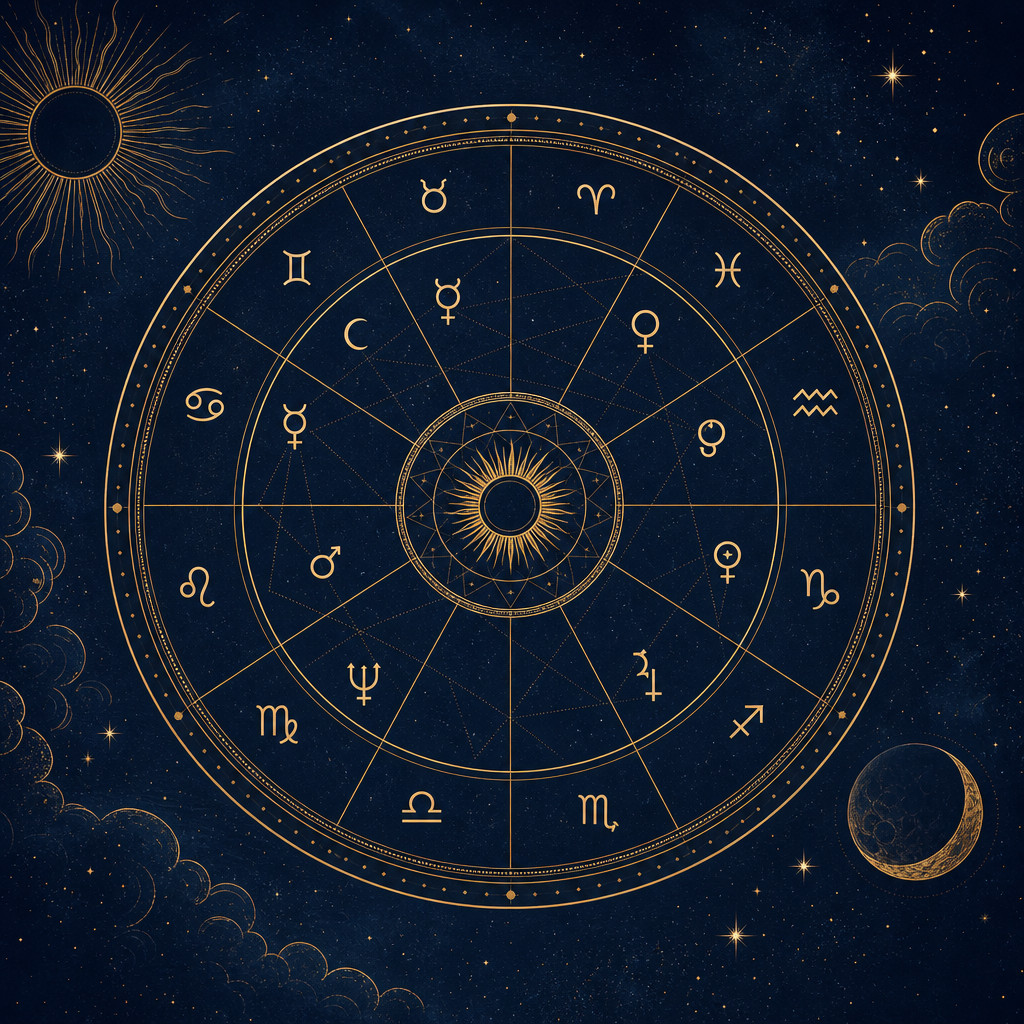
The Descendant is one of the four major angles in a natal chart, alongside the Ascendant, Midheaven, and Imum Coeli. It is located exactly 180 degrees from the Ascendant and represents the western horizon at the time of birth. In symbolic terms, the Ascendant describes how you approach life from the standpoint of “me,” while the Descendant introduces the “you” side of the axis.
This makes the Descendant essential for understanding one-to-one relationships. It can describe qualities you are naturally drawn toward in others, traits you may initially experience as more visible in partners than in yourself, and patterns that become clearer through commitment, cooperation, conflict, negotiation, and intimacy.
Because the Descendant depends on the exact birth time and location, an accurate birth time is important. A shift in birth time can change the Ascendant and therefore also change the Descendant sign.
What Does the Descendant Represent?
The Descendant is often associated with romantic relationships, but its meaning is broader. It can describe significant one-to-one dynamics of many kinds, including:
- Marriage and long-term romantic partnership
- Dating patterns and attraction
- Business partnerships and professional alliances
- Clients, advisors, agents, and collaborators
- Contracts and negotiated agreements
- Open competitors or rivals
- Projection: qualities you notice strongly in others
- The interpersonal skills you develop through close relationships
The Descendant therefore answers more than “Who will I marry?” A more useful question is: What do close relationships ask me to understand, develop, balance, or integrate?
Descendant vs. Ascendant: The Relationship Axis
The Ascendant and Descendant form a single axis. The Ascendant describes your instinctive approach, personal style, self-presentation, and way of entering life. The Descendant describes the relational counterpart: how you encounter others, what balance you seek in partnership, and which qualities become important when another person has equal influence in the situation.
Because they are opposite signs, the Ascendant and Descendant often describe a polarity. If the Ascendant emphasizes independence, the Descendant may emphasize cooperation. If the Ascendant is highly emotional, the Descendant may point toward qualities of structure or perspective. The goal is not to choose one side. Development often comes from integrating both.
For example, an Aries Ascendant has a Libra Descendant. The person may approach life directly and independently, yet relationships repeatedly teach diplomacy, mutuality, compromise, and shared decision-making. A Virgo Ascendant has a Pisces Descendant, suggesting a life approach focused on order and discernment while relationships may introduce compassion, surrender, imagination, or greater tolerance for uncertainty.
The Descendant and the 7th House
The Descendant is closely linked with the 7th house, traditionally associated with committed partnerships and one-to-one agreements. In many quadrant house systems, the Descendant forms the cusp of the 7th house. However, the Descendant is a specific astronomical angle, while the 7th house is a house sector whose exact boundaries depend on the house system.
For practical interpretation, the two are read together. The Descendant sign gives the style or tone of relationship dynamics. Planets in the 7th house add specific themes. The ruler of the Descendant sign shows where relationship matters connect with the rest of the chart.
What Does Your Descendant Sign Mean?
Your Descendant sign describes the qualities you may seek, meet, admire, resist, or gradually learn through partnership. It is important not to reduce these descriptions to stereotypes about the “type” of person you will marry. The same symbolism can appear through many different people and relationship situations.
Aries Descendant
Aries Descendant often brings relationships that emphasize initiative, independence, directness, courage, and strong personal will. You may be drawn to people who act decisively or who encourage you to become more assertive. Partnerships can teach you to express anger cleanly, make decisions without excessive delay, and maintain individuality within connection.
The challenge can be conflict for its own sake, impatience, or turning disagreement into competition. Healthy expression involves direct communication without unnecessary escalation.
Taurus Descendant
Taurus Descendant emphasizes stability, loyalty, consistency, sensuality, shared values, and practical reliability. You may seek relationships that feel grounded and dependable or partners who bring patience and calm.
Partnership may teach you about trust, financial priorities, boundaries around possessions, and the difference between healthy stability and resistance to change. Shared values often matter as much as emotional chemistry.
Gemini Descendant
Gemini Descendant highlights communication, curiosity, mental stimulation, variety, and adaptability. Conversation may be central to attraction, and you may be drawn to partners who are witty, informed, mobile, youthful, or connected to many interests.
Relationship growth often comes through asking better questions, listening carefully, and remaining mentally flexible. The challenge can be inconsistency, overthinking, or intellectualizing emotions that need to be felt directly.
Cancer Descendant
Cancer Descendant brings themes of emotional safety, belonging, care, protection, family, and sensitivity. You may seek partners who are nurturing or who make private life feel emotionally significant.
Relationships can teach you to receive care rather than only provide it, to respect emotional rhythms, and to create a secure home base. Challenges may include dependency, mood-driven reactions, or difficulty separating present relationships from family conditioning.
Leo Descendant
Leo Descendant emphasizes warmth, loyalty, generosity, creativity, recognition, and visible affection. You may be drawn to charismatic people or to relationships that feel expressive, romantic, and wholehearted.
Partnership can teach you to celebrate both your own individuality and your partner’s. Challenges may include pride, dramatic conflict, or a constant need for validation. Healthy Leo Descendant relationships make room for appreciation without turning love into a performance.
Virgo Descendant
Virgo Descendant highlights discernment, competence, service, practicality, routines, and improvement. You may value partners who are dependable, observant, useful, organized, or attentive to details.
Relationships may teach you to build workable systems together and to express care in practical ways. The challenge can be criticism, perfectionism, or treating the relationship as a problem to solve rather than a living connection.
Libra Descendant
Libra Descendant strongly emphasizes equality, diplomacy, cooperation, beauty, fairness, and partnership itself. Relationships often become a central arena for learning mutuality and shared decision-making.
You may be drawn to charming, socially skilled, balanced, or aesthetically oriented people. The challenge can be avoiding conflict, over-accommodating, or defining yourself too strongly through partnership. Healthy Libra Descendant expression values harmony without sacrificing honesty.
Scorpio Descendant
Scorpio Descendant brings intensity, loyalty, depth, privacy, power, trust, and transformation into relationship themes. You may be drawn to emotionally powerful connections or people who encourage greater honesty about vulnerability, desire, and fear.
Partnership may expose control issues, jealousy, secrecy, or fear of betrayal if trust is unstable. At its best, this placement supports profound honesty, resilience, emotional courage, and relationships capable of real transformation.
Sagittarius Descendant
Sagittarius Descendant emphasizes growth, truth, freedom, exploration, learning, and shared vision. You may be attracted to people with broad perspectives, international backgrounds, strong beliefs, or a love of travel and discovery.
Relationships may need room for movement and development. The challenge can be restlessness, bluntness, or escaping commitment when it feels limiting. Healthy expression allows freedom without avoiding accountability.
Capricorn Descendant
Capricorn Descendant brings seriousness, commitment, responsibility, structure, ambition, and long-term planning into partnership. You may value reliability, maturity, competence, and people who take commitments seriously.
Relationships can teach patience, boundaries, shared goals, and respect for time. Challenges may involve emotional reserve, excessive duty, status concerns, or treating partnership like an obligation rather than a source of connection.
Aquarius Descendant
Aquarius Descendant emphasizes independence, friendship, originality, equality, ideas, networks, and unconventional relationship structures. You may be drawn to unusual, intellectually independent, socially aware, or future-oriented people.
Partnership often works best when both people preserve individuality. The challenge can be emotional distance, unpredictability, or prioritizing principles over feelings. Healthy expression combines freedom with reliability.
Pisces Descendant
Pisces Descendant highlights compassion, sensitivity, imagination, spirituality, idealism, and emotional permeability. You may be drawn to gentle, artistic, intuitive, mysterious, or deeply empathetic people.
Relationships can teach surrender, acceptance, and emotional subtlety, but clear boundaries are essential. Challenges may include idealization, rescuing, confusion, or ignoring practical incompatibilities because the emotional or spiritual bond feels strong.
The Ruler of the Descendant: The Most Important Next Step
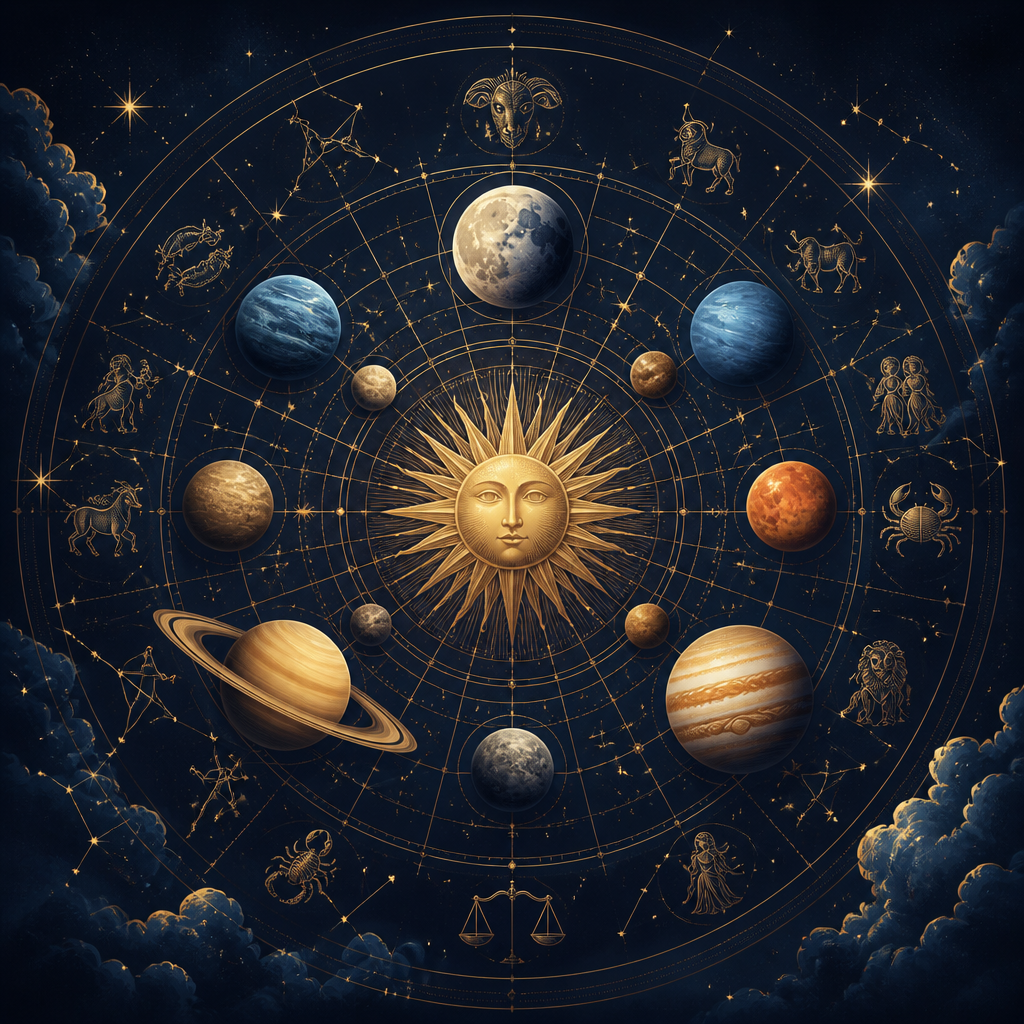
Once you know your Descendant sign, identify its planetary ruler. This ruler connects relationship themes to another part of the chart and often makes the interpretation far more specific.
For example, if your Descendant is in Gemini, Mercury rules the Descendant. If Mercury is in the 10th house, relationships may connect strongly with career, public life, or professional networks. If Mercury is in the 4th house, partnership may be closely tied to home, family, private life, or emotional foundations.
If your Descendant is in Taurus or Libra, Venus becomes especially important. For Aries, look to Mars. For Cancer, look to the Moon. For Leo, the Sun. For Virgo or Gemini, Mercury. For Scorpio, traditional astrologers often use Mars while modern astrologers may also consider Pluto. For Sagittarius, Jupiter. For Capricorn, Saturn. For Aquarius, traditional practice uses Saturn and modern practice may also consider Uranus. For Pisces, traditional practice uses Jupiter and modern practice may also consider Neptune.
The ruler’s sign, house, and aspects can show where relationships lead you, what they activate, and what qualities partnership asks you to develop.
Planets in the 7th House
Planets in the 7th house can become highly visible through close relationships. They do not guarantee a particular partner type, but they often describe recurring relational themes.
- Sun in the 7th: identity may develop strongly through partnership, cooperation, or visibility in one-to-one settings.
- Moon in the 7th: emotional security and responsiveness may become central to relationships.
- Mercury in the 7th: communication, discussion, negotiation, and intellectual connection may be essential.
- Venus in the 7th: partnership, affection, diplomacy, fairness, and shared values can become prominent.
- Mars in the 7th: attraction, assertion, conflict, chemistry, and active negotiation may shape close relationships.
- Jupiter in the 7th: growth, generosity, teaching, opportunity, or shared ideals may appear through partnership.
- Saturn in the 7th: commitment, responsibility, boundaries, maturity, delay, or serious lessons may define relationship development.
- Uranus in the 7th: freedom, change, unconventional partnerships, and strong independence needs may be important.
- Neptune in the 7th: sensitivity, idealization, compassion, spiritual connection, or unclear boundaries may need careful attention.
- Pluto in the 7th: intensity, power, trust, transformation, and deep psychological growth can become major themes.
Aspects to the Descendant
Planets that form strong aspects to the Ascendant–Descendant axis can modify relationship dynamics. A planet square the axis may describe tension that repeatedly surfaces in both identity and partnership. A trine or sextile may show qualities that integrate more easily. A conjunction to the Descendant can make that planet especially prominent in close relationships.
For example, Saturn aspecting the Descendant can emphasize commitment, caution, maturity, or fear of rejection. Uranus can bring a strong need for freedom and authenticity. Neptune may intensify idealization or empathy. Pluto can deepen trust, control, or transformation themes. No single aspect is automatically good or bad. The central question is how consciously its symbolism is lived.
Projection and the Descendant
One of the most useful psychological ideas associated with the Descendant is projection. Because the Descendant sits opposite the Ascendant, people sometimes experience its qualities as belonging more strongly to “the other person.”
For instance, someone who identifies strongly with independence may repeatedly attract partners who demand cooperation. Someone who sees themselves as highly rational may be drawn to emotionally expressive partners. Over time, the relationship can reveal that these “other” qualities also belong to the individual and need to be integrated more consciously.
This does not mean every partner is simply a mirror, nor does it justify unhealthy relationships. It means that recurring interpersonal patterns can provide information about qualities we may underuse, idealize, fear, or disown.
Does the Descendant Describe Your Soulmate?
No. The Descendant is not a guaranteed soulmate indicator and should not be used to predict one specific person. Many different people can express the same Descendant symbolism in very different ways.
Compatibility also depends on far more than one angle. Synastry, composite charts, Venus, Mars, the Moon, Saturn, house overlays, aspects, and real-life factors such as values, communication, timing, emotional maturity, and life circumstances all matter.
The Descendant is best used to understand your relationship patterns and developmental needs, not to reduce compatibility to a single sign match.
Descendant Sign vs. Venus Sign
The Descendant and Venus are both important for relationships, but they describe different layers. Venus is associated with attraction, pleasure, values, affection, aesthetics, and how you give and receive harmony. The Descendant describes the relational field itself: what becomes important in committed one-to-one dynamics and how you encounter another person as an equal.
A person may have a Venus sign that describes what feels attractive or pleasurable, while the Descendant points toward the deeper qualities required for sustained partnership. The two can reinforce each other or create useful contrast.
How to Interpret Your Descendant Step by Step
- Confirm your birth time. The Descendant is calculated from the Ascendant, so accurate timing matters.
- Find your Descendant sign. It will be the sign opposite your Ascendant.
- Study the sign’s relationship style. Focus on qualities, needs, and interpersonal lessons rather than stereotypes.
- Identify the Descendant ruler. Note its sign and house placement.
- Check planets in the 7th house. These add major themes to partnership.
- Review aspects to the Descendant or Ascendant. These show how other planetary drives interact with the relationship axis.
- Look for repeated themes elsewhere. Venus, Mars, Moon, Saturn, and the rulers of relevant houses can confirm or complicate the pattern.
- Compare symbolism with lived experience. Astrology becomes most useful when you identify repeating real-world relationship dynamics rather than forcing people into sign descriptions.
How the Descendant Can Help With Relationship Reflection
The Descendant is valuable because it shifts relationship astrology away from simplistic compatibility questions. Instead of asking only, “Which sign should I date?” you can ask more useful questions:
- What qualities do I repeatedly seek in partners?
- Which traits do I admire in others but hesitate to express myself?
- What kinds of conflict repeat across relationships?
- Do I overemphasize independence or partnership?
- What do I need in order to negotiate fairly?
- Where do I idealize, control, rescue, withdraw, or over-accommodate?
- What does mature partnership look like for me?
These questions turn the Descendant into a tool for self-awareness rather than prediction.
Frequently Asked Questions About the Descendant
Is the Descendant always opposite the Ascendant?
Yes. The Descendant is exactly 180 degrees opposite the Ascendant.
Is my Descendant sign the same as my 7th house sign?
Often, especially when the Descendant forms the 7th-house cusp. However, house systems can affect how signs occupy the rest of the 7th house, so the Descendant and the entire 7th house should be interpreted together.
Does the Descendant show who I will marry?
Not literally. It describes relationship qualities, patterns, attractions, and lessons rather than identifying one predetermined spouse.
Why do I not relate to my Descendant sign?
Read the ruler of the Descendant, planets in the 7th house, and aspects to the relationship axis. A single sign description is rarely enough.
Can the Descendant describe business partnerships?
Yes. The 7th house traditionally includes formal one-to-one partnerships, contracts, clients, and negotiated alliances, not only romance.
Is the Descendant more important than Venus for love?
Neither automatically replaces the other. Venus describes attraction, affection, values, and relational style, while the Descendant and 7th house describe committed one-to-one partnership dynamics. A complete relationship reading uses both.
Final Takeaway
The Descendant sign in astrology is one of the clearest symbols for understanding how relationships contribute to personal development. It describes the qualities you encounter in close partnership, the interpersonal balance you seek, and the patterns that become visible when another person stands opposite you as an equal.
Start with the Descendant sign, but do not stop there. Study its ruler, the 7th house, planets in that house, and aspects to the Ascendant–Descendant axis. The purpose is not to predict a perfect partner or reduce compatibility to zodiac stereotypes. It is to understand how relationships, commitment, projection, negotiation, and mutual growth function within the larger architecture of your birth chart.