

Quick answer: An empty house in astrology does not mean that nothing will happen in that area of life. It simply means that no natal planets were located in that house at the moment you were born. The house still has a sign on its cusp, a planetary ruler, aspects connected to that ruler, and ongoing activation through transits, progressions, and other timing techniques. Empty houses are normal because there are twelve houses but fewer planets commonly used in natal interpretation. In practice, an empty house usually means that the life area may not be as continuously emphasized as a heavily occupied house, not that the topic is absent.
What Is an Empty House in Astrology?
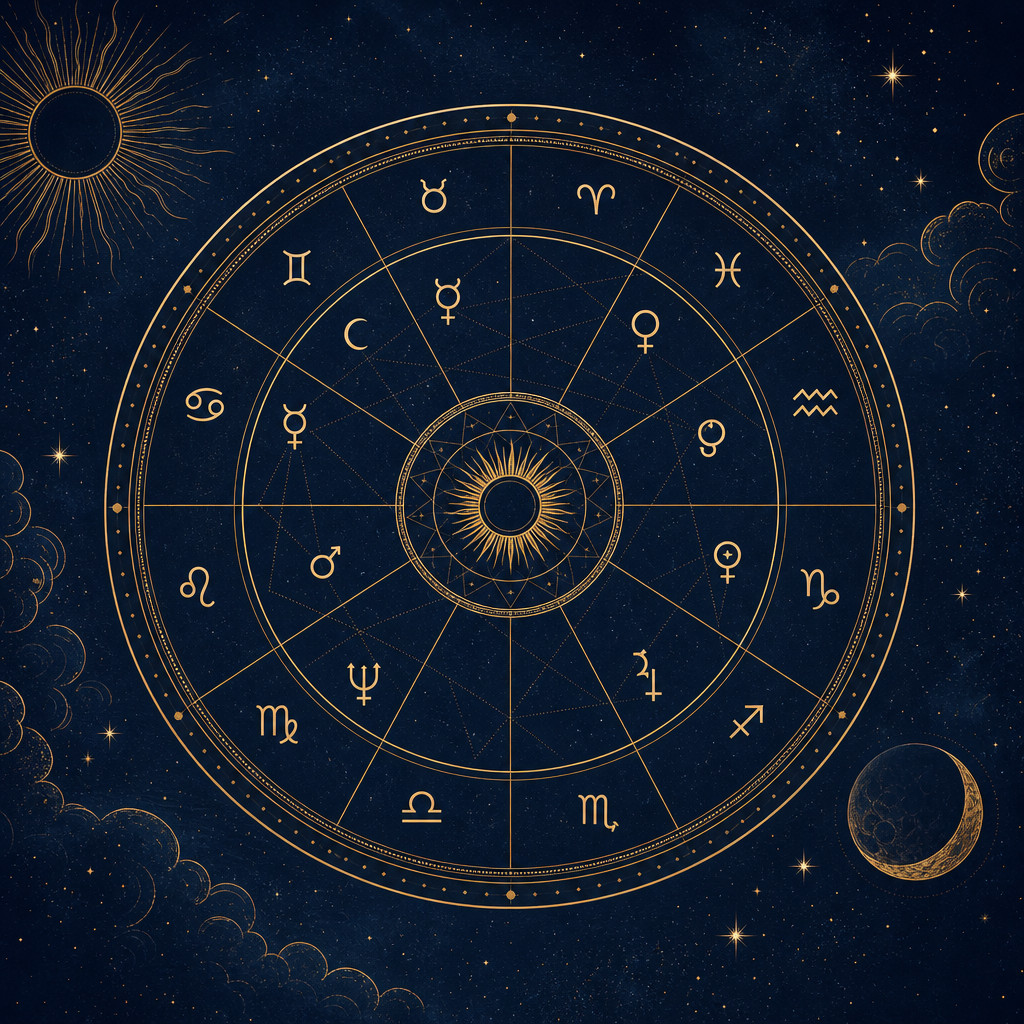
An empty house is a natal house that contains no planets. Because a standard birth chart has twelve houses and astrologers usually work with ten major planets, it is mathematically common for several houses to be empty. Even when additional points such as Chiron, the lunar nodes, or asteroids are included, many charts still contain houses without planets.
The important point is that a house does not disappear simply because no planet occupies it. The house still represents a life area, the cusp still falls in a zodiac sign, and that sign still has a ruler. That ruler becomes the main interpretive key.
For example, if your 7th house is empty but begins in Gemini, Mercury rules that house. To understand partnership, you would examine Mercury’s sign, house placement, aspects, and condition. If Mercury is in the 10th house, relationships may connect strongly with career, public life, reputation, or professional networks. If Mercury is in the 4th house, partnership may be closely linked with home, family, roots, and private life.
Do Empty Houses Mean Nothing Happens There?
No. This is one of the most common astrology misunderstandings. An empty 2nd house does not mean you will never earn money. An empty 5th house does not mean you will never fall in love, create art, or have children. An empty 7th house does not mean you will never marry. An empty 10th house does not mean you have no career.
Planets show concentrated functions and active psychological drives. Houses show areas of life. A house can be important without containing a planet because its ruler carries the story elsewhere in the chart.
Think of the house as a room and the ruling planet as the person responsible for that room. If no planet is sitting inside, the room still exists. You simply look to the ruler to see how the room operates and where its concerns are managed.
Why Are Empty Houses So Common?
There are twelve houses but only ten major planets in most modern natal charts. Because several planets can occupy the same house, especially during planetary clusters or stelliums, other houses naturally remain empty.
This means an empty house is not a flaw or a sign of deficiency. It is part of normal chart geometry. Some people have only three or four occupied houses, while others have planets distributed more evenly.
A chart with several empty houses may simply concentrate experience through a smaller number of highly activated life areas. Those occupied houses can become obvious focal points, while the empty houses often operate more quietly or through their rulers.
How to Interpret an Empty House Step by Step
- Identify the house. Start with the life topics traditionally associated with it.
- Find the sign on the house cusp. This describes the style through which that life area operates.
- Identify the ruler of that sign. This is the most important step.
- Find the ruler’s house placement. This shows where the empty house sends its energy.
- Study the ruler’s sign. This describes how the house concerns are handled.
- Check aspects to the ruler. Supportive or challenging aspects modify how smoothly the house themes develop.
- Look at transits to the house and its ruler. Empty houses can become highly active at specific times.
- Compare with the rest of the chart. Repeated themes elsewhere can make an empty house more important than it first appears.
The House Ruler Is the Key to Empty Houses
The sign on the cusp of an empty house points you toward its planetary ruler. That planet carries the house’s agenda.
For example, imagine an empty 2nd house in Leo. The Sun rules Leo, so the Sun becomes a key indicator for money, possessions, self-worth, and personal resources. If the Sun is in the 11th house, finances may connect with networks, community, audiences, organizations, or long-term goals. If the Sun is in the 6th house, income may connect more directly with work, service, routines, and skills.
This is why empty-house interpretation often becomes more precise than a simple statement such as “There are no planets there.” The ruler creates a bridge from the empty house to another part of the chart.
What If the House Ruler Is Strong or Challenged?
The condition of the ruler matters. A well-supported ruler can make the life area function with relative clarity even if the house is empty. A ruler under pressure may indicate that the area develops through tension, effort, delay, conflict, or repeated learning.
For instance, an empty 10th house ruled by Saturn may still produce a highly career-focused life if Saturn is angular, strongly aspected, or connected with the Sun or Midheaven. An empty 7th house ruled by Venus may become a major relationship signature if Venus forms close aspects with Saturn, Pluto, the Moon, or the Ascendant–Descendant axis.
Empty Houses vs. Occupied Houses
An occupied house generally receives more direct, constant planetary emphasis. If Mars sits in the 4th house, home, family, roots, and private life may repeatedly activate themes of action, conflict, initiative, or assertion. If Saturn sits in the 6th, work, routines, health, and responsibility may require sustained development.
An empty house is usually less continuously crowded with planetary demands. That does not make it unimportant. It may simply operate in a more straightforward way, or become more noticeable when its ruler or cusp is activated.
Sometimes people become preoccupied with occupied houses because those areas create more tension or complexity, while empty houses function well enough that they receive less conscious attention.
Can an Empty House Still Be a Major Life Theme?
Absolutely. Several factors can make an empty house central:
- The house cusp is an angle such as the Ascendant, Descendant, Midheaven, or IC.
- The house ruler is the chart ruler.
- The ruler is conjunct the Sun or Moon.
- The ruler sits in an angular house.
- The ruler receives strong aspects from Saturn, Uranus, Neptune, or Pluto.
- The cusp degree is repeatedly activated by transits or progressions.
- The empty house ruler also rules another important house.
- The house topic repeats through other chart signatures.
This is why chart interpretation must be synthetic. No single feature should be read in isolation.
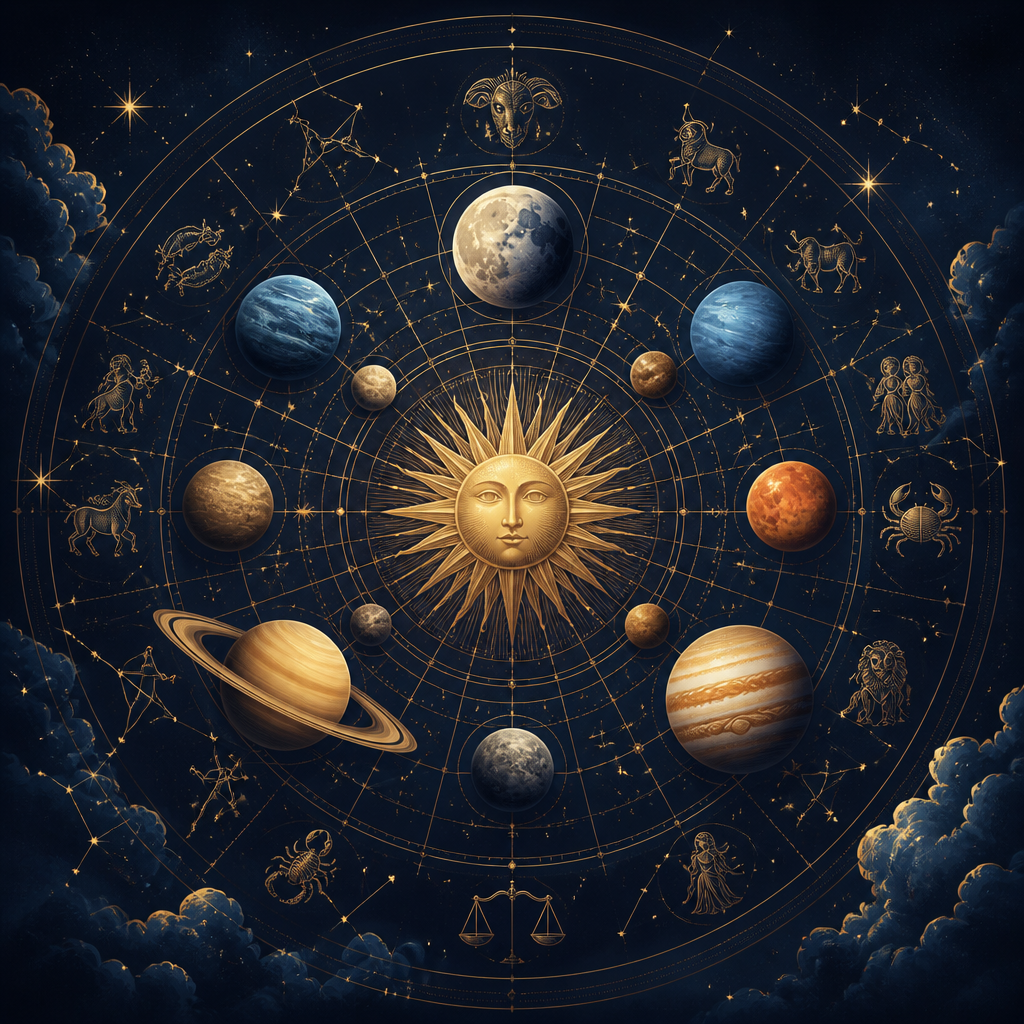
What Do Empty Houses Mean Through the 12 Houses?
Empty 1st House
An empty 1st house does not mean a weak personality or lack of identity. The Ascendant sign and its ruling planet remain extremely important. Study the chart ruler to understand self-presentation, initiative, body awareness, and how the person approaches life.
Empty 2nd House
An empty 2nd house does not mean poverty or lack of income. Look to the sign on the cusp and its ruler for information about money habits, resources, possessions, security, and self-worth. The ruler’s house often shows where income or value-building connects with the rest of life.
Empty 3rd House
An empty 3rd house does not indicate poor communication. Study its ruler for clues about learning, writing, speaking, siblings, short trips, and the local environment. Mercury also remains a general significator for communication.
Empty 4th House
An empty 4th house does not mean family or home is unimportant. The IC, the cusp sign, its ruler, and the Moon can all describe roots, ancestry, emotional foundations, and private life. Transits through the 4th can bring major moves, family developments, or inner restructuring.
Empty 5th House
An empty 5th house does not mean no romance, creativity, pleasure, or children. Examine the house ruler, Venus, and relevant aspects. The ruler can show where creative energy, dating experiences, hobbies, and self-expression become connected.
Empty 6th House
An empty 6th house does not mean no job, routines, or health concerns. Its ruler describes how work habits, service, skills, daily structure, and physical maintenance are managed. Transits through the 6th can make these themes temporarily dominant.
Empty 7th House
An empty 7th house does not mean you will never marry or form partnerships. The Descendant sign and its ruler are central. Venus, relationship aspects, and synastry also matter. Many people with empty 7th houses have active and significant relationship lives.
Empty 8th House
An empty 8th house does not mean you avoid intimacy, shared finances, crisis, or transformation. Study the ruler for information about trust, shared resources, debt, inheritance, vulnerability, and psychological change.
Empty 9th House
An empty 9th house does not mean no travel, higher education, religion, philosophy, or publishing. The ruler shows how worldview and expansion develop. Jupiter remains an additional general significator for growth and meaning.
Empty 10th House
An empty 10th house does not mean no career or public role. The Midheaven, its sign, its ruler, Saturn, and any aspects to the MC can be more important than planets inside the house. Many successful people have empty 10th houses.
Empty 11th House
An empty 11th house does not mean no friends or social networks. Look to the ruler for clues about community, groups, audiences, causes, future goals, and long-term aspirations.
Empty 12th House
An empty 12th house does not mean the unconscious, spirituality, retreat, or hidden matters are irrelevant. The ruler and its aspects can reveal how solitude, closure, intuition, and behind-the-scenes processes operate.
Do Empty Houses Mean You Have Already “Mastered” That Area?
Some popular astrology explanations claim that empty houses represent areas already mastered in a past life or areas that require no work. This is a spiritual interpretation rather than a standard technical rule, and it should not be treated as universally established astrology doctrine.
A more grounded interpretation is that empty houses lack natal planets, so they are not carrying the same constant planetary concentration as occupied houses. They can still contain meaningful challenges, opportunities, achievements, and life events.
What Happens When a Planet Transits an Empty House?
Transits can temporarily activate an empty house very strongly. When Jupiter enters an empty 9th house, travel, education, publishing, belief, or international connections may expand. Saturn crossing an empty 4th house may bring responsibility, restructuring, or serious decisions involving home and family. Uranus moving through an empty 7th house can correlate with changes in partnership patterns, freedom needs, or relationship expectations.
The natal house may be empty, but transiting planets do not care. They move through every house over time.
Progressions, Solar Returns, and Empty Houses
Secondary progressions, solar return charts, profections, solar arcs, and other timing techniques can also activate natal houses that contain no planets. A house can become highly relevant for a year or phase of life even if it is empty in the natal chart.
For example, a solar return may place several planets in the natal 6th-house area, making work, health, and routines prominent for that year. A profection year may activate the ruler of an empty natal house and bring its topics forward.
Does the House System Change Whether a House Is Empty?
Yes. Different house systems can shift house cusps enough that a planet changes houses. A planet near a cusp may fall in the 8th house in Placidus but the 9th in Whole Sign Houses, for example.
This means “empty” can depend on the house system used. Rather than treating this as a problem, astrologers usually choose a consistent system and interpret according to its logic. Some also compare systems when a planet sits very close to a cusp.
Empty Houses and Intercepted Signs
In some quadrant house systems, a house can contain an intercepted sign—one that does not appear on a house cusp. This adds another layer of interpretation, but it does not change the basic principle: the house still has a cusp ruler, and the intercepted sign also has a ruler whose placement can provide additional information.
Common Mistakes When Reading Empty Houses
- Assuming nothing happens there: life events can still strongly activate the house.
- Ignoring the house ruler: the ruler is usually the primary interpretive key.
- Predicting literal absence: an empty 7th does not mean no marriage; an empty 5th does not mean no children.
- Ignoring angles: the 1st, 4th, 7th, and 10th houses remain major even when empty.
- Forgetting transits: moving planets can make an empty house temporarily central.
- Reading one house in isolation: repeated themes elsewhere can reinforce the same life topic.
- Assuming empty equals easy: the ruler may still be heavily challenged.
How to Work With Empty Houses Constructively
The best approach is not to worry about what is “missing.” Instead, trace the house to its ruler and observe how that ruler functions in real life.
- Learn the meaning of the house.
- Identify the cusp sign.
- Find the ruling planet.
- Study the ruler’s house, sign, and aspects.
- Watch major transits to the ruler and house cusp.
- Compare the house topic with real-life experience.
- Notice whether the opposite house creates a balancing theme.
This method turns an apparently “blank” house into a connected part of the whole chart.
Frequently Asked Questions About Empty Houses
Is it bad to have many empty houses?
No. Many empty houses are normal. They usually mean that planetary energy is more concentrated in the occupied houses.
Does an empty 7th house mean I will be single?
No. Relationship interpretation should include the Descendant sign, its ruler, Venus, aspects, and the rest of the chart.
Does an empty 10th house mean I will not have a career?
No. The Midheaven and its ruler can be highly significant even without planets in the 10th house.
Does an empty 5th house mean no children?
No. Astrology should not use an empty 5th house as a literal prediction of childlessness. The house ruler and broader chart context matter.
Can an empty house become important later in life?
Yes. Transits, progressions, profections, solar returns, and other timing methods can activate any natal house.
Should I count Chiron, the Nodes, or asteroids when deciding if a house is empty?
That depends on your method. Many astrologers define an empty house as one containing no major planets and then interpret Chiron, nodes, or asteroids as additional factors rather than full substitutes for planetary occupation.
Are empty houses easier than occupied houses?
Sometimes they feel less continuously emphasized, but not necessarily easier. The house ruler can be strongly challenged or activated elsewhere.
Final Takeaway
Empty houses in astrology do not mean empty areas of life. They simply mean that no natal planets occupy those houses. The signs on the cusps, planetary rulers, aspects, transits, progressions, and other timing techniques keep every house active within the chart.
When you find an empty house, do not stop at “nothing is there.” Follow the sign on the cusp to its ruler. Then examine where that ruler is placed, how it is aspected, and when it becomes activated. This reveals how the life area operates and where its story connects with the rest of the chart.
A birth chart is a system of relationships, not a collection of isolated boxes. Empty houses are part of that system—and once you learn to read their rulers, they stop looking empty at all.