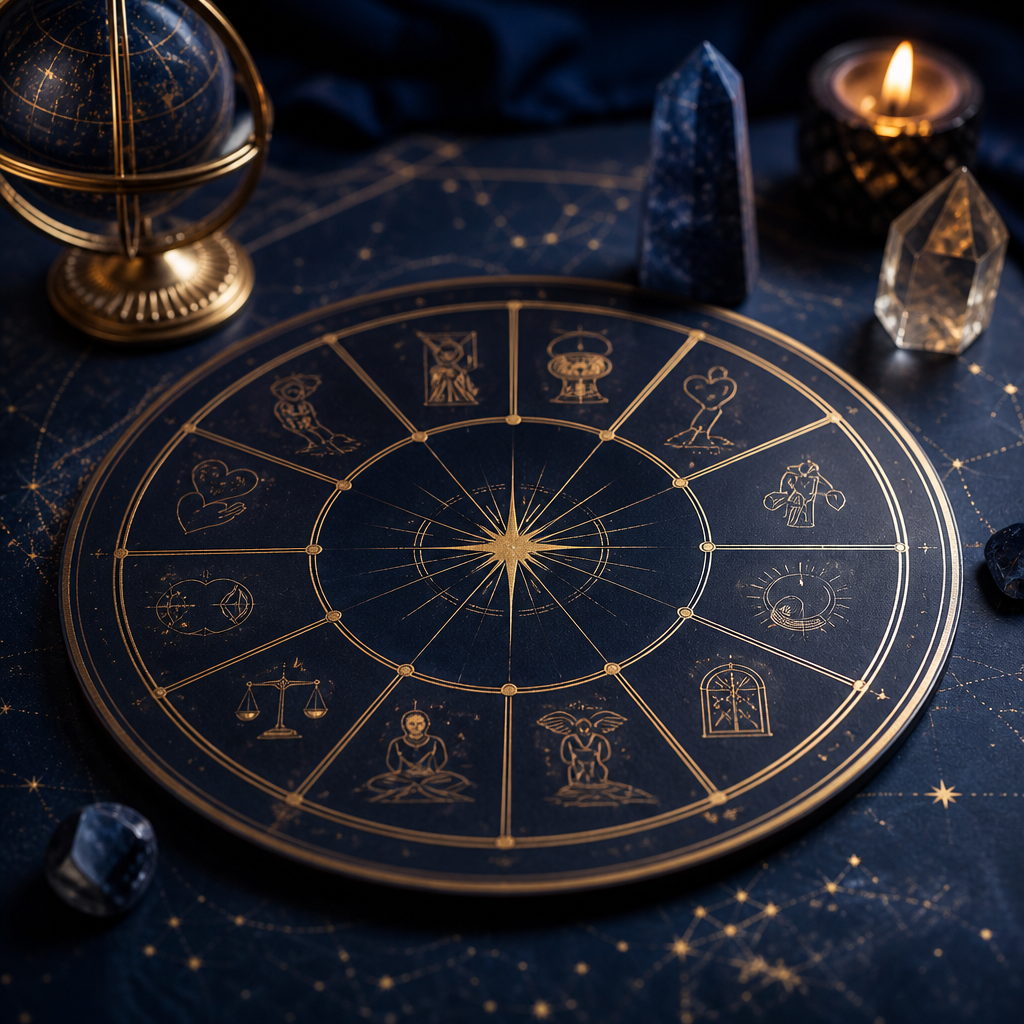
The North Node and South Node describe an astrological axis between what feels familiar and the qualities you are encouraged to develop. The South Node is commonly associated with established patterns, instincts, and abilities that can feel natural, while the North Node points toward experiences that stretch those habits and invite growth. They always sit opposite each other in the birth chart, so they are best interpreted as one connected story rather than two separate placements.
The lunar nodes are not planets. They are calculated points where the Moon’s orbit crosses the ecliptic, the apparent path of the Sun. Yet in natal astrology, they have become one of the most widely used symbols for discussing direction, development, repetition, and life themes.
What Are the North Node and South Node?
Astronomically, the Moon’s orbit is tilted relative to the ecliptic. The two places where those paths intersect are called the lunar nodes. The North Node, or ascending node, is where the Moon crosses north of the ecliptic. The South Node, or descending node, is where it crosses south.
Because these points are geometrically opposite, if your North Node is at 12° Aries, your South Node will be at 12° Libra. The same opposition applies to their houses in many charts, depending on the house system and exact cusp positions.
Astrologically, this polarity is essential. The nodes do not usually suggest abandoning one side and becoming only the other. Instead, they describe a developmental tension: familiar South Node strategies can become resources, but growth often requires learning the North Node’s less automatic qualities.
What Does the South Node Mean in Astrology?
The South Node is often interpreted as the side of the nodal axis that feels known. It can describe habits, reactions, talents, assumptions, or ways of navigating life that require relatively little conscious effort.
Some astrological traditions connect the South Node with karma or previous incarnations. Others use a psychological interpretation and treat it as a symbol of conditioning, established strengths, or familiar coping patterns. These are interpretive frameworks rather than scientifically demonstrated facts, so it is useful to know which approach a reading is using.
In practical natal interpretation, the South Node can answer questions such as: What do I default to when I want security? What qualities come easily? What strategy has become so familiar that I may overuse it? What strength can support me without becoming my entire identity?
The goal is not to reject the South Node. Many of its qualities are valuable. The challenge is recognizing when familiarity has turned into repetition.
What Does the North Node Mean in Astrology?
The North Node is commonly interpreted as a direction of development. Its sign suggests qualities that may need greater conscious cultivation, while its house shows a life area where those qualities can be practiced.
North Node experiences do not always feel immediately comfortable. If the South Node represents a well-traveled road, the North Node can resemble unfamiliar terrain. This does not mean that every difficult experience is automatically your “destiny.” Rather, the placement offers a symbolic framework for noticing where new capacities may emerge when you move beyond automatic patterns.
A useful North Node question is not “What am I destined to become?” but “What qualities become available when I stop relying exclusively on what I already know?” This keeps nodal astrology focused on development rather than fatalism.
North Node vs. South Node: The Core Difference
The simplest way to understand the axis is through contrast. The South Node represents familiarity; the North Node represents development. The South Node may show what is easy to repeat; the North Node may show what asks for deliberate practice. The South Node can provide competence; the North Node can broaden that competence.
But these meanings should never be reduced to “South Node bad, North Node good.” A chart is an integrated system. Growth usually comes from bringing the strengths of the South Node into a healthier relationship with the North Node.
For example, someone with a South Node emphasizing independence and a North Node emphasizing cooperation does not need to become dependent. The more constructive task may be learning to retain initiative while developing collaboration, listening, and mutuality.
Why the Nodes Are Always Opposite
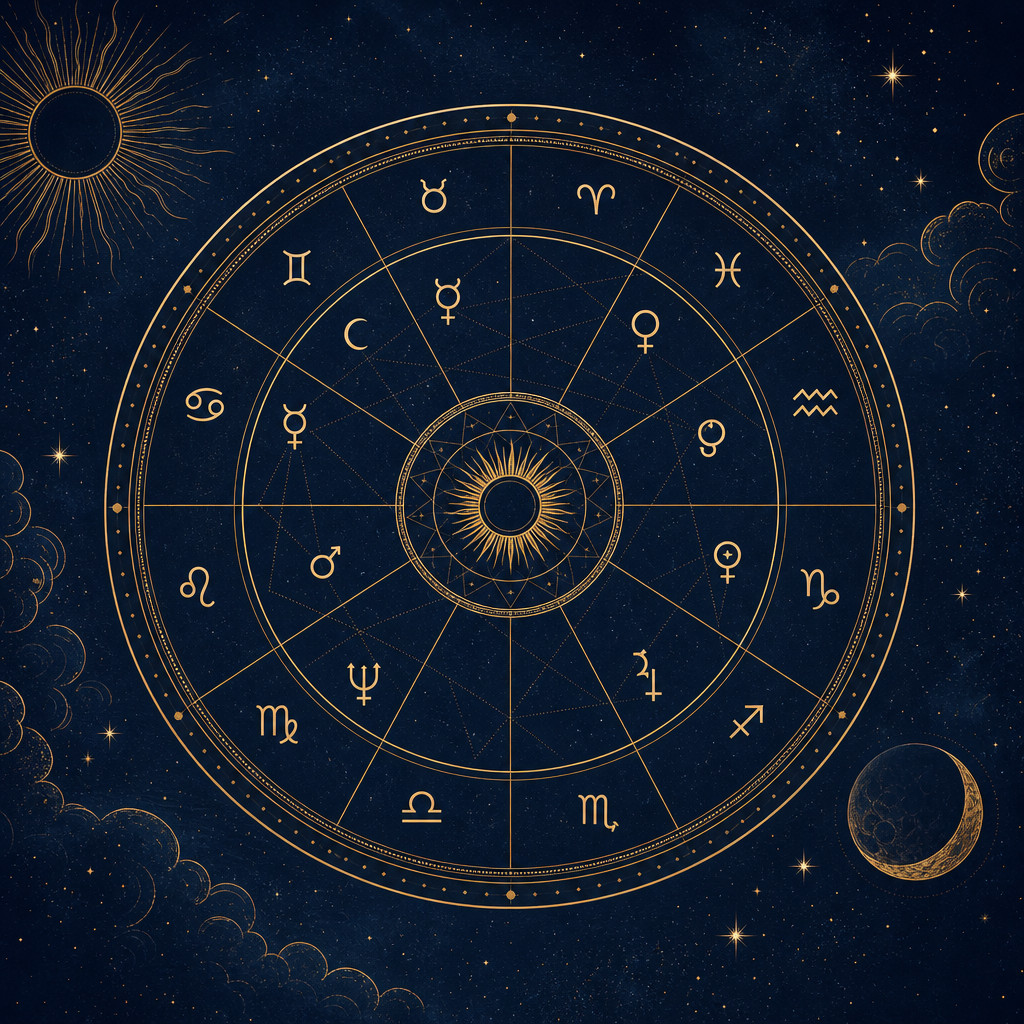
The zodiac contains six pairs of opposite signs: Aries–Libra, Taurus–Scorpio, Gemini–Sagittarius, Cancer–Capricorn, Leo–Aquarius, and Virgo–Pisces. Because the nodes always oppose each other, every nodal placement activates one of these axes.
Opposite signs are different, but they also address complementary themes. Aries and Libra explore self and relationship. Taurus and Scorpio engage stability and transformation. Gemini and Sagittarius relate information to meaning. Cancer and Capricorn connect private foundations with public responsibility. Leo and Aquarius contrast personal expression with collective participation. Virgo and Pisces explore discernment and surrender.
This is why nodal interpretation becomes richer when you read the pair instead of memorizing one North Node description.
North Node and South Node by Sign
The signs describe the style of the nodal lesson. The following summaries are starting points, not complete readings.
North Node Aries / South Node Libra
Growth may involve initiative, self-definition, courage, and direct action. Familiar Libra strategies may include accommodation, diplomacy, or defining choices through other people. The aim is not to abandon relationships, but to participate in them without losing individual agency.
North Node Taurus / South Node Scorpio
Development may emphasize stability, simplicity, patience, self-worth, and sustainable resources. Scorpio familiarity can bring emotional depth and resilience, but constant intensity or crisis can become exhausting. Taurus asks what can be built slowly and maintained.
North Node Gemini / South Node Sagittarius
Growth may come through curiosity, questions, conversation, and attention to specific information. Sagittarius familiarity can produce strong convictions and broad vision. Gemini encourages flexibility and willingness to discover that reality may contain more than one useful perspective.
North Node Cancer / South Node Capricorn
Development may involve emotional responsiveness, belonging, care, vulnerability, and private foundations. Capricorn competence around responsibility and achievement remains useful, but Cancer asks whether success also includes emotional connection and a sustainable inner life.
North Node Leo / South Node Aquarius
Growth may emphasize creativity, personal presence, courage to be visible, and heartfelt self-expression. Aquarius familiarity can bring objectivity and group awareness. Leo asks for personal participation rather than always observing from the edge of the collective.
North Node Virgo / South Node Pisces
Development may involve discernment, routines, practical skill, boundaries, and useful action. Pisces familiarity can support imagination and compassion, but Virgo asks how inspiration can become something workable and specific.
North Node Libra / South Node Aries
Growth may involve cooperation, negotiation, reciprocity, and awareness of another person’s perspective. Aries independence remains a strength, while Libra develops the capacity to create outcomes that account for both self and other.
North Node Scorpio / South Node Taurus
Development may require deeper exchange, emotional honesty, transformation, and willingness to encounter uncertainty. Taurus familiarity provides steadiness and self-reliance. Scorpio asks when security must evolve rather than simply be preserved.
North Node Sagittarius / South Node Gemini
Growth may involve synthesis, conviction, exploration, and developing a larger framework of meaning. Gemini familiarity supplies information and adaptability. Sagittarius asks which ideas are significant enough to guide action.
North Node Capricorn / South Node Cancer
Development may emphasize structure, accountability, long-term goals, boundaries, and public responsibility. Cancer familiarity can provide sensitivity and strong attachment to home or emotional safety. Capricorn asks how inner security can support mature engagement with the wider world.
North Node Aquarius / South Node Leo
Growth may involve collaboration, systems thinking, community, experimentation, and contribution beyond personal recognition. Leo familiarity supports creativity and confidence. Aquarius asks how individual gifts can participate in something larger.
North Node Pisces / South Node Virgo
Development may involve trust, imagination, compassion, acceptance, and tolerance for ambiguity. Virgo familiarity brings analysis and practical competence. Pisces asks when control and constant correction can soften enough to allow intuition and wider perspective.
The Houses Matter as Much as the Signs
The nodal signs describe how the axis operates, while the houses describe where its themes are likely to become noticeable. A North Node in the 10th house, for example, may emphasize growth through vocation, responsibility, reputation, or public contribution. A North Node in the 4th house may shift attention toward home, roots, family patterns, and inner security.
This means two people with the same North Node sign can have substantially different nodal stories. A Gemini North Node in the 2nd house is not identical to a Gemini North Node in the 7th house. Both involve Gemini qualities such as curiosity and exchange, but the relevant life areas differ.
For a GEO-friendly and useful interpretation, combine the placement rather than searching only for “North Node in Gemini meaning.” Read the sign, house, opposite South Node, aspects, and rulers together.
What Do Aspects to the Nodes Mean?
Planets close to the North Node or South Node, or forming major aspects to the nodal axis, can become important in a nodal interpretation. A conjunction is especially noticeable because a planet occupies nearly the same zodiac position as one node.
For example, Venus near a node may connect nodal themes with relationships, values, attraction, aesthetics, or resources. Saturn may introduce questions of structure, responsibility, boundaries, or delay. Mars can bring initiative, conflict, desire, or courage into the developmental story.
As always, the exact aspect and orb matter. Do not assume a planet influences a node simply because it occupies the same sign. Compare the degrees.
True Node vs. Mean Node
Astrology software may offer a choice between the True Node and Mean Node. Both calculate the lunar nodal axis, but they use different methods. The Mean Node smooths the node’s motion into an averaged path. The True Node accounts for its irregular oscillation.
The two positions are usually relatively close but can differ enough to matter near a sign or house boundary. Astrologers disagree about which calculation should be preferred. Consistency is more useful than switching systems whenever one interpretation seems more appealing.
If your True Node and Mean Node fall in different signs or houses, note the discrepancy and identify which system your chart software or astrologer uses.
Are the Lunar Nodes About Karma?
Karmic language is common in modern nodal astrology, particularly in spiritual and evolutionary approaches. The South Node may be described as past-life experience and the North Node as a soul-growth direction.
That interpretation can be meaningful for people who use reincarnation-based astrology, but it is not the only way to work with the nodes. A psychological reading can describe the same axis in terms of established patterns and developmental challenges without making claims about previous lives.
For clear interpretation, distinguish symbolic or spiritual belief from astronomical fact. The existence and positions of the lunar nodes are calculable. Claims about reincarnation or predetermined spiritual purpose belong to particular metaphysical traditions.
How to Read Your Nodal Axis Step by Step
Start with the North Node sign and South Node sign as a polarity. Identify the qualities each sign represents and notice where you may over-identify with the South Node side. Next, locate both nodes by house to see which life areas carry the tension.
Then examine planets conjunct or closely aspecting the nodes. Check the rulers of the nodal signs and where those ruling planets are placed. Finally, compare the nodal story with the rest of the chart. A theme repeated by the Sun, Moon, Ascendant, angles, or major configurations deserves more attention than an isolated interpretation.
A useful sequence is nodal signs → nodal houses → aspects → sign rulers → whole-chart synthesis.
How to Work With Your North Node in Everyday Life
You do not need to make dramatic life changes simply because of a nodal placement. Development can happen through repeated small choices. A North Node emphasizing communication might be practiced by asking better questions. One emphasizing boundaries might involve learning to say no clearly. One emphasizing collaboration may appear through listening, negotiation, or shared decision-making.
The South Node can help. Its skills are often exactly what you bring into unfamiliar North Node territory. The task is integration: use what is already developed without allowing it to determine every response.
This makes the nodes especially useful as reflection tools. Instead of asking whether you have “completed” your North Node, ask whether your range of responses has expanded.
Common Mistakes When Reading the North and South Nodes
A common mistake is treating the South Node as something negative that must be eliminated. Another is treating the North Node as a guaranteed career, relationship, or destiny prediction. Both approaches oversimplify an axis designed to be read relationally.
It is also misleading to interpret the sign without the house or to ignore planets closely connected to the nodes. Finally, avoid using a nodal placement to justify major decisions without considering real-world evidence, circumstances, and personal responsibility.
Frequently Asked Questions
Is the North Node a planet?
No. It is a calculated point where the Moon’s orbit crosses the ecliptic toward the north. The South Node is the opposite crossing point.
Are the North Node and South Node always opposite?
Yes. They form one axis and are always approximately 180 degrees apart in the zodiac.
Does the South Node mean something bad?
No. It can symbolize familiar patterns and developed capacities. Problems may arise when those patterns are used automatically or exclusively, but South Node strengths can support North Node development.
Does the North Node show my destiny?
Some spiritual traditions describe it that way, but a less deterministic interpretation treats the North Node as a symbolic direction of growth rather than a fixed outcome.
Should I use the True Node or Mean Node?
Both are established calculations used by astrologers. They are often close together. If they differ significantly in your chart, note which method you are using and interpret consistently.
How long do the lunar nodes stay in one zodiac sign?
The nodal axis moves slowly through the zodiac and completes a cycle in roughly 18.6 years. Because the nodes generally move retrograde through the signs, people born within the same broad period can share a nodal sign pair, while houses and exact degrees make the placement more personal.
Final Takeaway
The North Node and South Node are most useful when understood as a developmental axis. The South Node describes familiar territory, including skills and patterns that may be easy to repeat. The North Node points toward qualities and experiences that can expand your range.
Neither node should be interpreted alone. Read the opposite signs, houses, exact degrees, aspects, and planetary rulers as one system. And rather than treating the North Node as a rigid instruction from fate, use it as a question: where might growth require a response that is less automatic and more consciously chosen?
That approach preserves the symbolic richness of nodal astrology while keeping the interpretation practical, contextual, and open to personal agency.