
A daily Tarot card is one of the simplest ways to work with Tarot without turning every reading into a prediction. Instead of asking what will definitely happen, a one-card reading can create a focused moment of reflection. The card becomes a prompt: something to notice, question, journal about, or carry into the day.
This approach is especially useful for beginners because it keeps the reading manageable. You do not need to memorize all 78 cards before you begin. You can learn through repetition, observation, and personal experience while still respecting the traditional symbolism of the deck.
Quick Answer: What Is a Daily One-Card Tarot Reading?
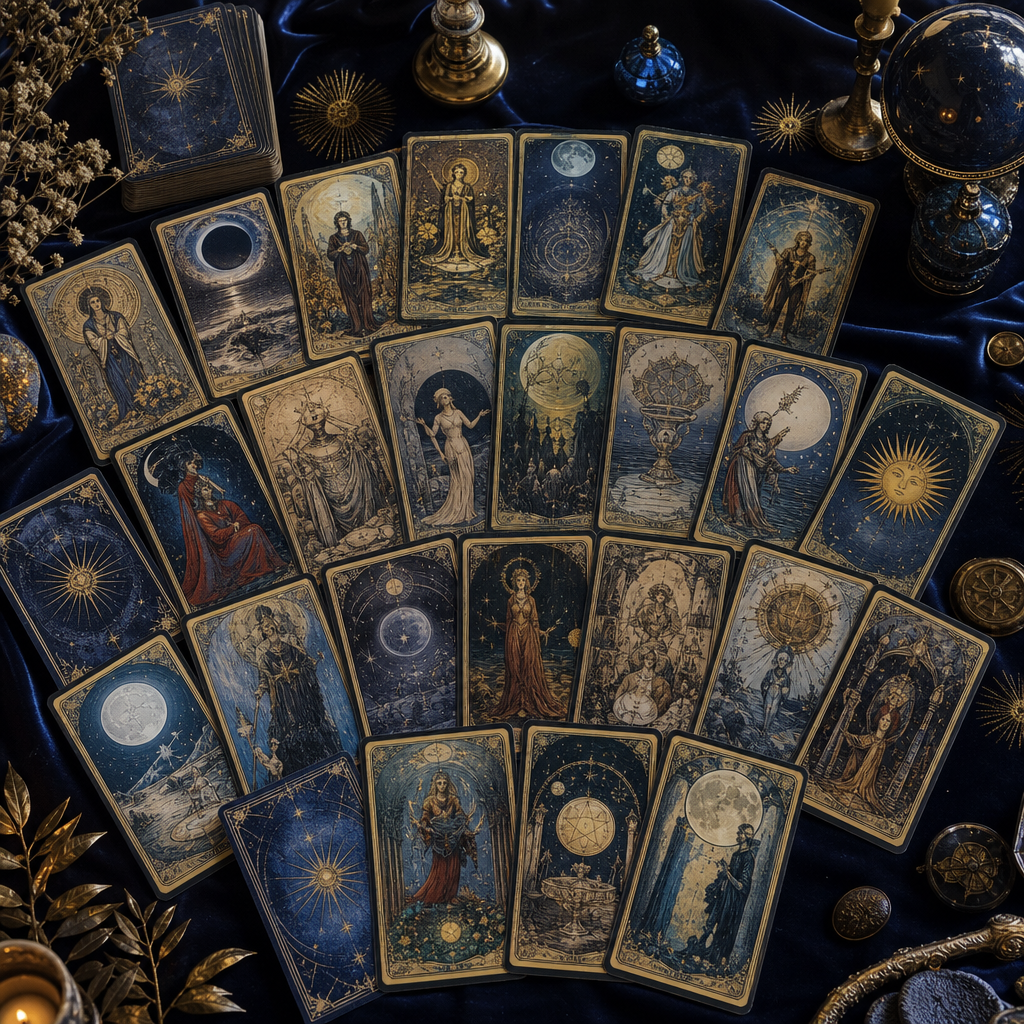
A daily one-card Tarot reading is a practice in which you draw a single Tarot card and use its imagery, themes, and traditional meanings as a reflection prompt for the day. The goal does not have to be fortune-telling. You can ask, “What should I pay attention to today?”, “What quality would help me today?”, or “What perspective am I overlooking?”
After drawing the card, observe the image before checking a guidebook. Notice what stands out, connect the symbolism to your current situation, write a short interpretation, and revisit the card later. Over time, this creates a personal record of how Tarot symbolism interacts with your real experiences.
Why One Card Can Be Enough
Large Tarot spreads can be useful when a question has several moving parts, but more cards do not automatically create a better reading. A single card reduces noise. It asks you to stay with one symbol long enough to explore it from several angles.
For daily reflection, this simplicity is an advantage. You are not trying to map an entire future. You are identifying one theme that may help you become more observant. A card such as The Hermit might invite quiet evaluation. The Chariot might raise questions about direction and self-control. The Two of Pentacles might highlight competing priorities. None of these themes needs to be treated as a guaranteed event.
Step 1: Choose a Reflective Question
The quality of a one-card reading often depends on the question. Very narrow predictive questions can encourage you to force the card into a yes-or-no answer. Reflective questions leave room for insight and personal agency.
Useful daily questions include:
- What deserves my attention today?
- What energy or attitude may help me today?
- What pattern should I notice in myself?
- What could I approach differently?
- What lesson can I explore today?
- Where might I need more balance?
You can also draw without a formal question and simply ask for a theme for reflection. The important point is to avoid treating the card as an unquestionable instruction.
Step 2: Shuffle With a Clear Intention
There is no single correct way to shuffle Tarot cards. Some readers shuffle until a card falls out. Others cut the deck and draw from the top. Some fan the cards across a table and choose intuitively. For a daily practice, consistency is often more useful than complexity.
Before drawing, take a moment to state your question mentally or aloud. This creates a clear boundary for the reading. You are asking the card to function within one reflective context rather than trying to make it answer every concern in your life at once.
Step 3: Observe the Card Before Looking Up the Meaning
When you draw the card, spend a minute looking at it before opening a guidebook. What is the first detail you notice? Is the figure moving or still? Does the scene feel open or confined? What emotions do the colors, posture, landscape, objects, or expressions evoke?
Your first reaction is not necessarily the “correct” interpretation, but it is useful information. Tarot reading combines established symbolic traditions with observation. By recording your immediate response before reading a standard definition, you can distinguish what the image evokes in you from what you later learn about its conventional meaning.
Step 4: Identify the Card’s Core Theme
Next, reduce the card to a few core ideas. For example, The Magician can relate to initiative, skill, focus, and using available resources. The High Priestess can suggest inner listening, uncertainty, patience, or information that is not yet fully visible. Strength can point toward courage, restraint, patience, and calm influence.
Minor Arcana cards can be approached in the same way. The Eight of Pentacles may emphasize practice and craftsmanship. The Three of Cups can bring attention to friendship and shared support. The Five of Swords may encourage reflection on conflict, winning, pride, or the cost of a particular argument.
Step 5: Connect the Symbolism to Real Life
This is where a one-card reading becomes useful. Ask where the card’s theme already exists in your day rather than searching for a dramatic event that proves the card “came true.”
If you draw the Four of Swords, you might notice that you have been mentally overloaded and need a quieter schedule. If you draw Justice, you might pay closer attention to fairness, accountability, or the consequences of a decision. If you draw the Page of Wands, you might notice curiosity around a new idea that deserves exploration.
The connection should remain proportionate. A difficult-looking card does not mean something bad must happen, and a positive card does not guarantee a perfect day.
Step 6: Write a Short Daily Tarot Journal Entry
Journaling turns a daily card into a learning system. You do not need a long entry. Record the date, the card, your question, three keywords, your first impression, and one practical reflection.
A simple template can look like this:
- Card: The Hermit
- Question: What deserves my attention today?
- Keywords: solitude, reflection, inner guidance
- First impression: I may need less external noise.
- Practical reflection: Give myself thirty quiet minutes before making an important decision.
Later in the evening, add one sentence about what actually happened. This is valuable because it prevents memory from reshaping the reading after the fact.
Should You Use Upright and Reversed Cards?
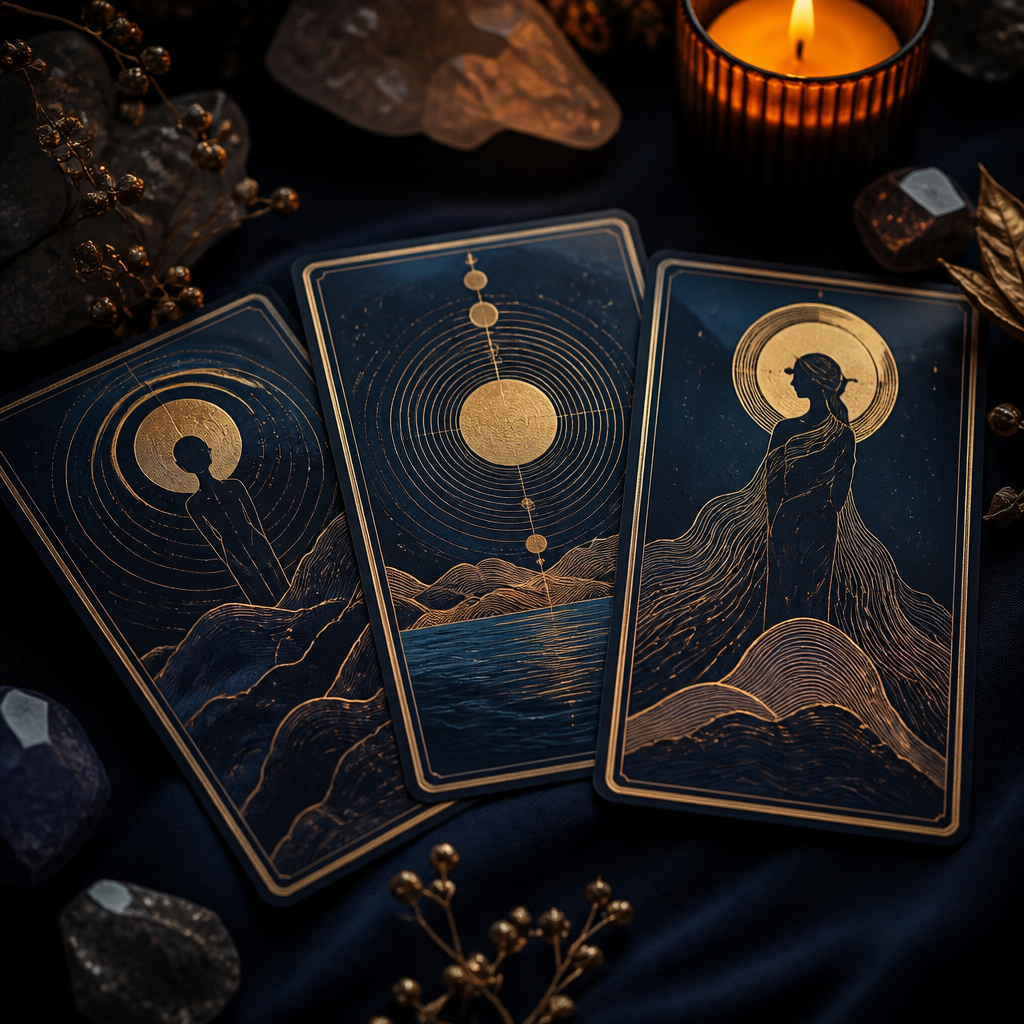
Reversals are optional. Beginners can build a strong daily practice using upright cards only. If you do use reversals, avoid assuming that a reversed card simply means the opposite or something negative.
A reversal can be explored as blocked expression, internalized energy, delay, excess, avoidance, or a need to reconsider the upright theme. For example, a reversed Strength card might prompt questions about self-doubt, suppressed frustration, or difficulty regulating a strong reaction.
Choose one system and use it consistently enough to learn from it. Changing your rules every time you dislike a card makes it harder to evaluate your interpretations honestly.
Daily Tarot for Morning vs. Evening Reflection
A morning draw works well when you want a theme to carry through the day. You can ask what deserves attention and then observe how the symbol appears in your choices, conversations, and reactions.
An evening draw has a different purpose. Instead of asking what might matter, you can ask what the day taught you, what you have not processed yet, or what perspective could help you understand an experience. Evening readings may feel less predictive because the day has already happened.
You can use either method. What matters most is that the practice supports reflection rather than anxiety.
What If You Draw a “Scary” Tarot Card?
Cards such as Death, The Tower, The Devil, the Ten of Swords, or the Three of Swords can look alarming, especially when drawn first thing in the morning. In a reflective one-card practice, they should not be treated as literal forecasts of disaster.
Death can point toward endings, transition, release, or a need to stop carrying an outdated pattern. The Tower can raise questions about unstable assumptions or sudden awareness. The Devil can highlight attachment, compulsion, temptation, or the places where you give away choice. The Ten of Swords can invite reflection on exhaustion, finality, or accepting that something has run its course.
Ask what the symbolism helps you examine. Do not escalate an uncomfortable image into a prediction without evidence.
What If the Card Makes No Sense?
Sometimes a card will feel unrelated to your day. That is normal. You do not need to invent a connection. Write down the card and return to it later. The meaning may become clearer, or it may remain unremarkable.
This is an important part of responsible Tarot practice. If every event is stretched until it fits the card, the exercise becomes confirmation bias rather than useful reflection. Allow some readings to be uncertain.
How to Avoid Pulling Too Many Clarifier Cards
One of the easiest ways to lose the value of a one-card practice is to keep drawing until you receive a card you prefer. A clarifier can be useful, but repeated clarifiers often turn a simple reflection into reassurance-seeking.
Try staying with the original card. Ask several questions about the same symbol: What is constructive here? What is uncomfortable? What behavior could this describe? What would the balanced expression of this card look like? One card often contains more depth than it first appears to.
How a Daily Card Helps You Learn Tarot
Drawing one card a day exposes you repeatedly to the deck without requiring memorization sessions. Over weeks and months, you begin to recognize suits, numbers, recurring symbols, court-card personalities, and Major Arcana themes.
You also learn where textbook meanings are too broad. A card may repeatedly show up for you around a particular type of situation. Your journal can reveal these personal associations while keeping them anchored to documented observations rather than vague memory.
One-Card Tarot and Personal Decision-Making
Tarot can help you examine a decision, but it should not replace evidence, expertise, or responsibility. Instead of asking, “Should I quit my job because this card says so?”, ask, “What aspect of this work decision deserves more attention?” The card can then prompt questions about security, ambition, conflict, burnout, values, or uncertainty.
For medical, legal, financial, safety, or other high-stakes decisions, use qualified professional guidance and reliable information. Tarot can be a reflective supplement, not the deciding authority.
A Five-Minute Daily Tarot Routine
- Choose one reflective question.
- Shuffle and draw one card.
- Observe the image for one minute.
- Write three keywords and one sentence about how the theme might apply.
- Return in the evening and note what, if anything, felt relevant.
This routine is short enough to maintain consistently. Consistency matters more than making each reading elaborate.
Frequently Asked Questions
Can I pull one Tarot card every day?
Yes. A daily card can be a simple reflection or journaling practice. If daily readings make you anxious or dependent on the cards for ordinary choices, reducing the frequency may be healthier.
What is the best question for a daily Tarot card?
“What deserves my attention today?” is a flexible starting question. Other useful prompts ask about perspective, balance, habits, strengths, or lessons rather than guaranteed future events.
Should I draw the card in the morning or at night?
Either works. Morning draws provide a theme to observe during the day, while evening draws can help you reflect on experiences that have already happened.
Can beginners use reversed Tarot cards?
Yes, but they are not required. Beginners may find upright-only readings easier while learning the core meanings. Reversals can be added later as an additional layer.
What if I keep drawing the same card?
Record the repetition before deciding what it means. Repeated cards can encourage deeper reflection on a recurring theme, but frequency can also occur naturally through random draws.
Is a daily Tarot card a prediction?
It does not have to be. In this method, the card is primarily a symbolic prompt for reflection. Tarot is not scientifically validated as a method for reliably predicting future events.
Final Takeaway
A daily Tarot card works best when it helps you pay closer attention rather than surrender your choices. One card is enough to explore a meaningful theme, notice an emotional pattern, question an assumption, or identify a practical intention for the day.
Keep the process simple: ask a reflective question, draw one card, observe before interpreting, connect the symbolism to real life, and record what you notice. Over time, the practice can deepen both your knowledge of Tarot and your awareness of your own habits. The value is not in forcing every card to predict an event. It is in using symbolism carefully, consistently, and with enough openness to learn from what you actually experience.