A personal daily horoscope starts with a simple idea: the sky is moving, but your birth chart stays fixed. Instead of reading only a general horoscope for your Sun sign, you compare today’s planetary positions with the specific planets, houses, and angles in your natal chart. This creates a more individualized framework for reflection.
You do not need to interpret every planet or every possible aspect each morning. A useful daily horoscope can be built from a small number of high-value signals: the transiting Moon, major transits to natal planets, the houses being activated, and any slow-moving transit that is already shaping a longer chapter of your life.
Quick Answer: How Do You Create a Personal Daily Horoscope?
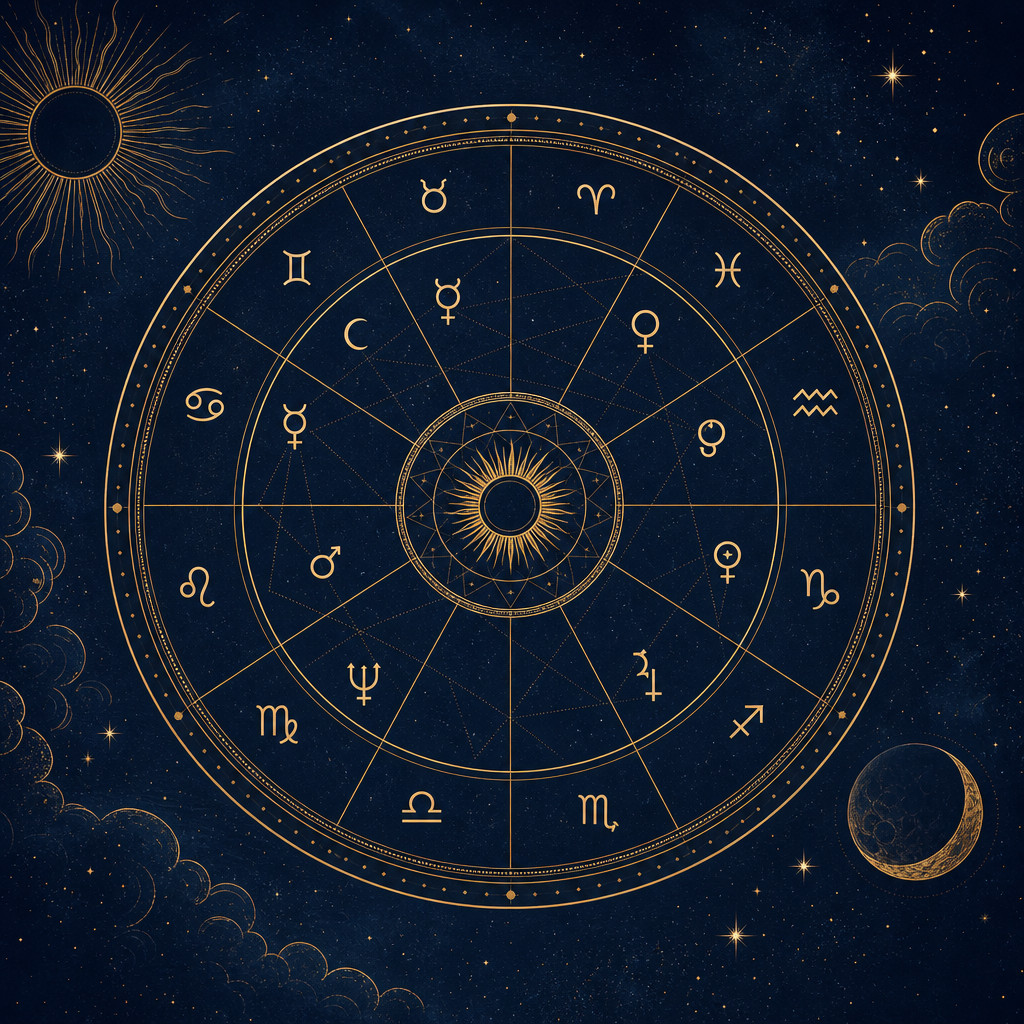
Start with an accurate natal chart based on your birth date, exact birth time, and birthplace. Then calculate the current planetary positions for the day you want to examine. Compare the transiting planets with your natal chart, paying particular attention to the Moon, close aspects to natal planets, the houses receiving current transits, and longer-term outer-planet influences.
Finally, translate those symbols into a short set of practical themes. Rather than writing “this will happen today,” frame your horoscope around questions such as: What may deserve more attention? Where could emotions be more reactive? Which area of life is emphasized? What longer-term process may be especially noticeable today?
Why a Birth Chart Makes a Daily Horoscope More Personal
Sun-sign horoscopes group everyone born under the same zodiac sign into a broad category. A natal chart contains much more information. It places the Sun, Moon, planets, Ascendant, Midheaven, and twelve houses according to a specific birth moment and location.
Two people with the same Sun sign can therefore have different Moon signs, Ascendants, house placements, and planetary aspects. The same transit may also fall into different houses for each person. That is why a transit through your 10th house can emphasize career and public responsibilities while the same planet may activate another person’s 4th house and draw attention toward home or family.
A personal horoscope is not automatically more certain or predictive. It is simply based on more individualized astrological inputs.
Step 1: Begin With an Accurate Natal Chart
Your birth chart is the reference map for the entire process. Ideally, you need three pieces of information:
- Birth date — determines the planetary positions for the day you were born.
- Birth time — helps calculate the Ascendant, Midheaven, and house cusps.
- Birthplace — provides the geographic coordinates and time-zone context needed for the chart.
If the birth time is unknown, you can still examine many planet-to-planet transits, but house positions and angles may be unreliable. Avoid pretending that an uncertain birth time produces precise house-based daily predictions.
Step 2: Know the Natal Placements That Matter Most
Before looking at today’s sky, identify the most important anchors in your natal chart. For a practical daily reading, begin with your natal Sun, Moon, Ascendant, Mercury, Venus, and Mars.
The Sun is commonly associated with identity, purpose, vitality, and conscious direction. The Moon relates to emotional responses, habits, security needs, and instinctive patterns. The Ascendant describes the eastern horizon at birth and is often used to organize the houses. Mercury relates to thinking and communication, Venus to attraction and values, and Mars to drive, assertion, and action.
You can later add Jupiter, Saturn, Uranus, Neptune, Pluto, the Midheaven, lunar nodes, or other points. Starting with a smaller set makes the daily process easier to interpret consistently.
Step 3: Check Today’s Planetary Transits
A transit is the current position of a planet compared with your natal chart. Because planets move at different speeds, they operate on different timescales.
The Moon moves quickly and changes zodiac signs roughly every two to three days, making it especially useful for short-term emotional and situational themes. Mercury, Venus, and Mars can describe faster-moving periods involving communication, relationships, motivation, and activity. Jupiter and Saturn tend to describe broader developmental periods, while Uranus, Neptune, and Pluto can remain relevant for months or longer.
Your daily horoscope should distinguish between a fast trigger and a long background transit. A slow Saturn transit does not suddenly begin and end in one afternoon. A daily Moon aspect, however, may temporarily make that longer Saturn theme feel more noticeable.
Step 4: Start With the Transiting Moon
If you want one efficient starting point, use the Moon. First note today’s Moon sign. Then identify which natal house the Moon is moving through and whether it forms a close aspect to one of your natal planets.
For example, a Moon transit through the 6th house may bring daily routines, workload, organization, or wellbeing habits into sharper awareness. If that Moon simultaneously forms a conjunction with natal Mars, reactions may feel quicker or more assertive. If it trines natal Venus, social or relational interactions may feel easier to approach.
This does not mean a particular event must occur. The Moon is better used as a short-term indicator of emphasis and emotional tone than as a guarantee.
Step 5: Identify Which Natal House Is Being Activated
Houses help answer the question, “Where in life might this transit be most relevant?” A simplified daily reference is:
- 1st house: identity, presentation, initiative
- 2nd house: resources, money, values, possessions
- 3rd house: communication, learning, local environment
- 4th house: home, family, roots, private life
- 5th house: creativity, pleasure, romance, self-expression
- 6th house: routines, work habits, service, wellbeing
- 7th house: partnerships, agreements, one-to-one dynamics
- 8th house: shared resources, intimacy, vulnerability, deeper change
- 9th house: higher learning, worldview, travel, meaning
- 10th house: career, reputation, responsibility, public direction
- 11th house: friends, groups, networks, long-term goals
- 12th house: rest, retreat, unconscious patterns, closure
A planet’s symbolism and the house topic should be read together. Venus moving through the 2nd house might focus attention on values, spending, comfort, or self-worth. Mars moving through the 3rd can emphasize direct communication, mental urgency, debate, or increased local activity.
Step 6: Look for Close Aspects to Natal Planets
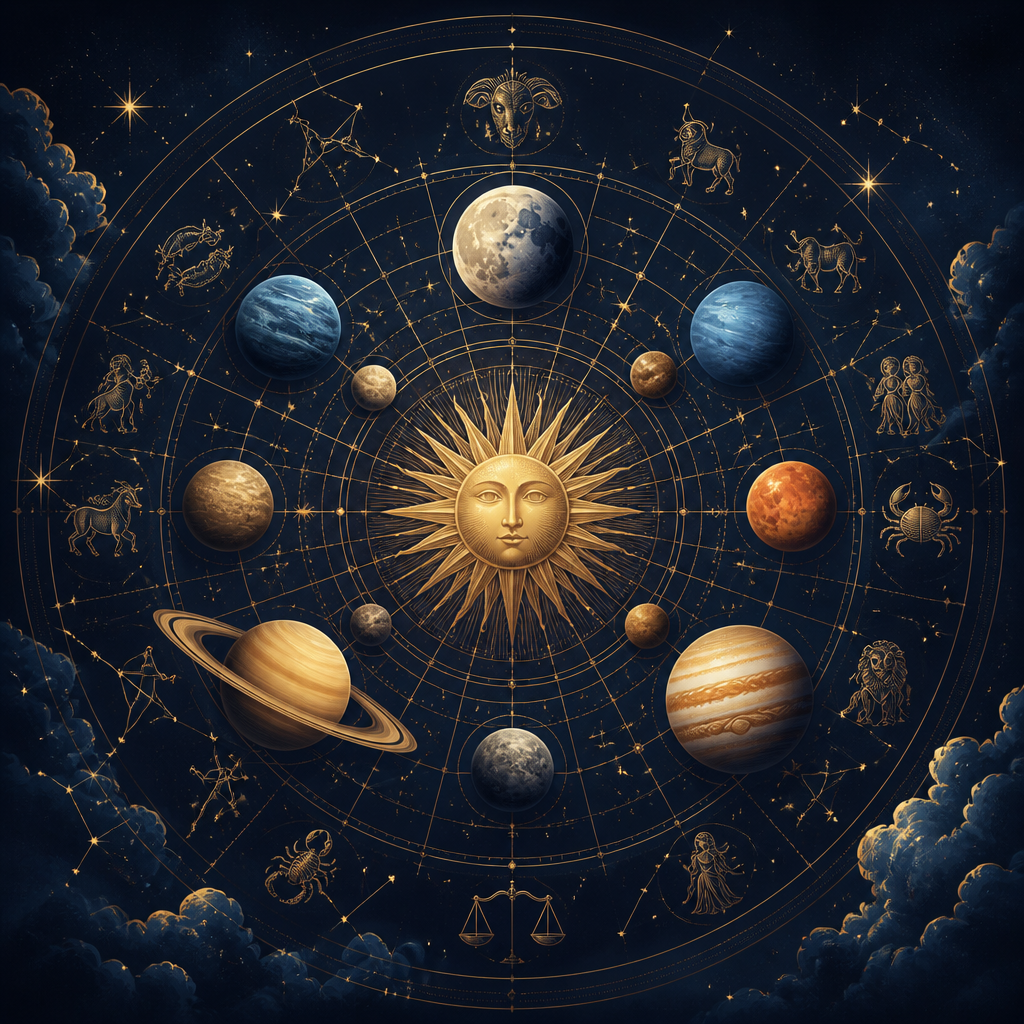
Aspects describe angular relationships between transiting and natal planets. For a simple daily horoscope, focus on the conjunction, opposition, square, trine, and sextile.
A conjunction combines or intensifies themes. An opposition can highlight polarity, negotiation, or awareness through contrast. A square often symbolizes tension that demands adjustment. A trine is commonly associated with smoother expression or easier integration, while a sextile can describe an opportunity that becomes more useful when actively engaged.
Do not treat “hard” aspects as automatically bad or “easy” aspects as automatically good. A square can motivate action, while a trine can pass unnoticed if you do nothing with it.
How Close Should an Aspect Be?
For daily interpretation, tighter aspects are generally easier to prioritize than loose ones. If several transits are active, start with those closest to exact. The appropriate orb depends on the planet, aspect, and astrological tradition, so there is no single universal cutoff.
The practical goal is prioritization. If you include every possible wide aspect, your horoscope becomes a list of contradictory statements. A focused daily reading should identify a few dominant themes rather than attempt to describe the entire chart.
Step 7: Separate Daily Triggers From Long-Term Transits
This distinction is one of the most useful skills in personal astrology. Fast planets can describe short windows; slow planets describe larger chapters.
Suppose Saturn is making a long-term conjunction to your natal Sun. Themes involving responsibility, structure, limits, maturity, or sustained effort may remain relevant for months. On a particular day, the Moon might form an aspect to both Saturn and your natal Sun. The Moon does not create the entire Saturn chapter; it may simply make that ongoing issue more emotionally visible for a few hours.
This layered approach prevents you from interpreting every day as an isolated astrological event.
Step 8: Prioritize Transits to the Sun, Moon, Ascendant, and Midheaven
When time is limited, transits to major natal anchors can help you reduce complexity. The Sun and Moon are central personal points, while the Ascendant and Midheaven are important chart angles when the birth time is accurate.
A transit to the Ascendant can coincide symbolically with themes of self-presentation, personal approach, or changing engagement with the environment. A transit to the Midheaven may highlight career direction, visibility, reputation, or public responsibilities. Again, these are interpretive themes rather than guaranteed outcomes.
Step 9: Turn Astrology Into Three Daily Themes
After reviewing the chart, stop collecting data and synthesize it. A useful format is to write only three themes:
- Emotional tone: based mainly on the transiting Moon and its closest natal contacts.
- Area of emphasis: based on the houses receiving the most relevant transits.
- Growth or action theme: based on a significant personal or longer-term transit.
For example: “Emotional tone: more mentally active and communicative. Area of emphasis: partnerships and conversations. Growth theme: be direct without rushing to conclusions.” This is more practical than producing ten paragraphs of disconnected planetary keywords.
Step 10: Convert Predictions Into Reflective Questions
One of the best ways to make a daily horoscope useful is to turn astrological statements into questions. Instead of “Mars square Mercury means an argument,” ask: “Where could impatience affect how I communicate today?” Instead of “Venus in the 10th means career success,” ask: “How might diplomacy, presentation, or relationship-building support my public work?”
Questions preserve personal agency. They also reduce the temptation to search for events that confirm the horoscope regardless of what actually happens.
A Simple Five-Minute Personal Horoscope Routine
You do not need professional astrology software open all day. Once your natal chart is saved, a short routine can be enough:
- Check today’s Moon sign and natal house.
- Note the Moon’s closest aspect to a natal planet, if any.
- Check close transits from Mercury, Venus, or Mars.
- Remember one major slow transit already active in your chart.
- Write three themes and one practical question for the day.
At night, add one sentence about what felt relevant and what did not. This creates a record that can help you evaluate your interpretations rather than relying on selective memory.
Example: Building a Daily Horoscope
Imagine a person has a natal Taurus Sun, Cancer Moon, and Libra Ascendant. Today the transiting Moon is moving through their 10th house and forms a square to natal Mercury, while Venus is making a supportive aspect to their natal Sun. Saturn is also in a longer-term transit affecting their work-related chart area.
A balanced daily synthesis might be: “Public responsibilities and career visibility may deserve extra attention. Emotional reactions could affect communication, so allow more time before responding to important messages. Relationship skills, patience, and a measured presentation may help you navigate a broader period of increased responsibility.”
Notice what this example does not say. It does not claim that a boss will call, that a promotion is guaranteed, or that an argument must happen. The horoscope identifies themes and provides a practical way to work with them.
Should You Include Retrogrades in a Daily Horoscope?
Yes, but keep them in proportion. A retrograde is usually a multi-day or multi-week background condition rather than a unique event for one individual day. Mercury retrograde, for example, may encourage additional attention to communication, planning, revision, or assumptions, but it should not dominate every daily reading.
A retrograde becomes more personally relevant when the retrograding planet makes a close aspect to one of your natal planets or moves through an important natal house.
What About the Moon Phase?
The Moon phase can add context to the daily Moon sign. A New Moon, First Quarter, Full Moon, or Last Quarter describes a broader Sun–Moon relationship, while the Moon sign describes the zodiac style through which lunar symbolism is expressed.
You can use the phase as a secondary layer: beginnings and intention around a New Moon, visibility or culmination around a Full Moon, adjustment around quarter phases. But avoid forcing every real-life event into a lunar-phase narrative.
Common Mistakes When Writing Your Own Daily Horoscope
Reading every transit. Too much information creates noise. Prioritize the closest and most personally relevant contacts.
Ignoring the natal chart. General sky conditions become more personal only when compared with your natal placements and houses.
Treating one transit as destiny. A chart contains multiple overlapping symbols, and astrology does not establish a single unavoidable outcome.
Using vague hindsight. Record your interpretation before the day unfolds so you can compare it with what actually happened.
Using astrology instead of evidence. For important health, legal, financial, safety, career, or relationship decisions, consider real-world information and qualified professional guidance where appropriate.
How to Make Your Daily Horoscope More Accurate Over Time
Accuracy in this context should mean greater consistency and specificity in your interpretive process, not certainty about future events. Keep a dated journal of the transits you prioritized, the themes you wrote, and what you observed.
After several weeks, review your notes. Which types of transits seemed meaningful? Which interpretations were too broad? Did you repeatedly ignore contradictory evidence? Did a particular natal planet or house become especially noticeable during certain transits?
This review process can improve your astrological literacy while reducing confirmation bias. It also teaches you how your own chart behaves in practice instead of relying only on generalized keywords.
Frequently Asked Questions
Do I need my exact birth time for a personal daily horoscope?
An exact birth time is especially important for the Ascendant, Midheaven, and houses. Without it, many planet-to-planet transits can still be studied, but house-based interpretation may be unreliable.
Which transit should I check first every day?
The transiting Moon is a practical starting point because it moves quickly and can show changing short-term emphasis. Then check close aspects from faster planets and any important slow transit already active.
Is my Rising sign more useful than my Sun sign for daily horoscopes?
Many astrologers use the Ascendant to organize houses, so an accurate Rising sign can add important house-based context. The Sun remains a major natal placement. A personal reading works best by integrating multiple chart factors rather than choosing only one sign.
How many transits should I interpret each day?
There is no fixed number, but a small number of strong transits is usually more useful than a long list of weak ones. For a quick routine, three to five prioritized signals are enough.
Can a personal horoscope predict exactly what will happen?
No reliable method has established astrology as a scientifically validated way to predict specific future events. A personal daily horoscope is better used as a symbolic framework for reflection, attention, and journaling.
Can I create tomorrow’s horoscope in advance?
Yes. Planetary positions can be calculated ahead of time. Write your interpretation before the day occurs, then compare it with your actual experience afterward. This can be a useful way to test your interpretive habits.
Final Takeaway
Creating a personal daily horoscope does not require interpreting the entire sky every morning. Begin with a reliable birth chart, check today’s transits, prioritize the Moon and close contacts to important natal points, identify the houses being activated, and keep longer-term transits in the background.
Then simplify. Reduce the chart to an emotional tone, an area of emphasis, and one practical growth theme. Turn those themes into questions rather than absolute predictions, and record your observations so you can evaluate them later.
The strongest daily astrology practice is not the one that makes the most dramatic claims. It is the one that helps you observe patterns carefully, distinguish short-term triggers from long-term cycles, and remain responsible for your choices. Astrology can provide a symbolic language for reflection, but important decisions should still be grounded in evidence, circumstances, and appropriate professional advice.