The Hierophant Tarot card represents tradition, shared beliefs, spiritual guidance, learning, and the wisdom passed from one generation to the next. In a reading, it often points to established systems, trusted teachers, rituals, institutions, or values that provide structure and meaning. Depending on the question, The Hierophant can encourage you to learn from proven wisdom, seek mentorship, join a supportive community, or examine whether the rules you follow still reflect what you truly believe.
As Major Arcana card V, The Hierophant sits at an important point in the Tarot journey. After the personal authority and structure of The Emperor, The Hierophant introduces collective knowledge: customs, ethics, spiritual frameworks, and the teachings that help individuals understand their place within a larger tradition. It is not simply a card about religion. More broadly, it concerns systems of meaning, formal learning, mentorship, community standards, and the tension between inherited wisdom and personal truth.
What Does The Hierophant Tarot Card Mean?
The Hierophant’s core meaning is tradition, belief systems, spiritual teaching, conformity, and guidance through established wisdom. Upright, the card often favors learning from a trusted source, respecting a meaningful tradition, or following a structured path. Reversed, it may highlight dogma, restrictive rules, unquestioned beliefs, or a need to develop a more personal spiritual philosophy.
The card can appear when you are deciding whether to follow convention or create your own path. It asks a subtle question: Which traditions deserve your respect, and which beliefs have you accepted without examining them?
The Hierophant Symbolism and Imagery
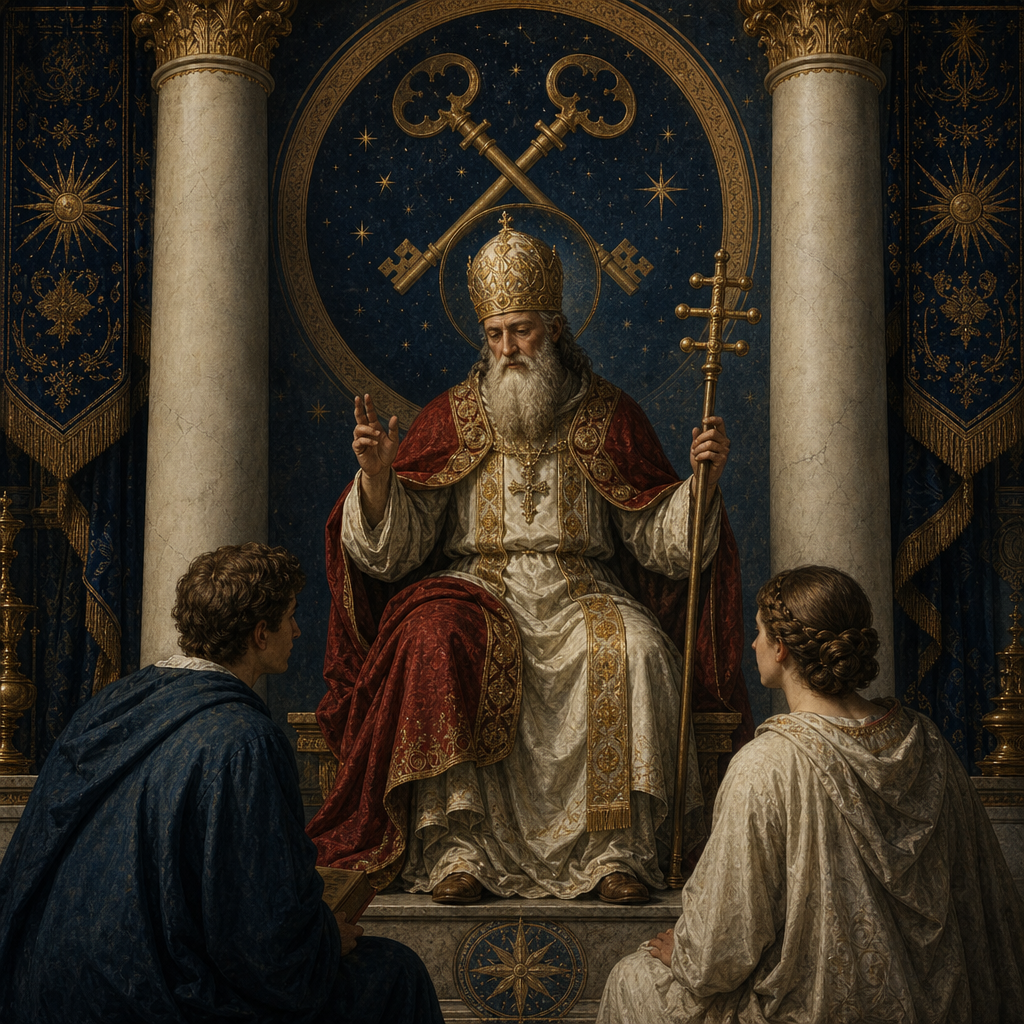
Traditional Tarot decks usually portray The Hierophant as a spiritual teacher seated between pillars, often wearing ceremonial robes and holding a symbolic staff. Two followers or students may appear before him. These details emphasize authority, transmission of knowledge, initiation, ritual, and the relationship between teacher and student.

The spiritual teacher
The central figure represents a person or institution that preserves and interprets a body of knowledge. In modern readings, this can symbolize a spiritual guide, professor, counselor, elder, tradition, professional organization, or any established system that teaches people how to understand the world.
The two followers
The students suggest learning, initiation, and participation in a shared tradition. They remind us that wisdom is often developed in community rather than in isolation. This distinguishes The Hierophant from The High Priestess, whose knowledge is inward, intuitive, and private.
Keys, robes, and ritual symbols
Keys frequently symbolize access to knowledge or spiritual understanding. Ceremonial clothing represents formal roles and established systems. Together, these details suggest that The Hierophant deals with knowledge that has a structure, language, lineage, or accepted method.
The Hierophant Upright Meaning
When The Hierophant appears upright, it often suggests that structure, tradition, or trustworthy guidance can help you move forward. You may benefit from studying an established method, seeking a mentor, following a proven process, or reconnecting with values that give your life direction.
Common upright themes include:
- Tradition and cultural or family values
- Spiritual teaching and mentorship
- Education, training, and formal learning
- Commitment to a shared belief system
- Community, institutions, and social expectations
- Ritual, ceremony, and meaningful practices
- Ethics, principles, and moral frameworks
The Hierophant does not automatically mean that you should obey every rule. Instead, it asks whether established wisdom can provide a useful foundation. Sometimes the fastest way to grow is not to reject tradition but to understand it deeply enough to know which parts remain valuable.
The Hierophant Reversed Meaning
Reversed, The Hierophant can indicate questioning tradition, resisting conformity, rejecting dogma, or creating a personal belief system. It may appear when external expectations feel too rigid or when a teacher, institution, family rule, or social norm no longer fits your experience.
Possible reversed themes include:
- Breaking from convention
- Feeling restricted by rules or institutions
- Unexamined beliefs becoming limiting
- Hypocrisy within a system or authority structure
- Seeking an unconventional teacher or path
- Developing a personal spiritual philosophy
The reversed Hierophant does not necessarily advise rebellion for its own sake. Its deeper message is discernment. Before rejecting a tradition, understand why it exists. Before following one, ask whether it still serves your values.
The Hierophant in Love and Relationships
In love readings, The Hierophant often points to commitment, shared values, traditional relationship structures, or formalizing a partnership. It can be associated with marriage, engagement, family approval, religious or cultural expectations, or two people choosing to build a relationship around common principles.
If you are single
The card may suggest meeting someone through an established community, school, spiritual group, professional setting, or family network. It can also indicate that your beliefs about relationships are strongly influenced by tradition. This is a good time to ask whether your expectations are genuinely yours or inherited from others.
If you are in a relationship
The Hierophant may highlight commitment, shared rituals, long-term plans, or conversations about marriage and family. It can also reveal differences in religion, culture, ethics, or expectations about what a relationship “should” look like.
Reversed, the card may suggest that one or both partners want a less conventional arrangement, or that social expectations are creating unnecessary pressure.
The Hierophant in Career and Money
In career readings, The Hierophant favors structured learning, mentorship, established organizations, credentials, professional standards, and proven methods. You may benefit from formal training, certification, an experienced supervisor, or a clearer understanding of the rules within your field.
For money, the card generally supports a conservative and disciplined approach. It can indicate following sound financial principles, learning from qualified experts, or avoiding impulsive decisions that ignore long-term structure.
Reversed, The Hierophant may point to frustration with bureaucracy, outdated workplace norms, or a desire to pursue a less conventional career path. It can also warn against blindly following advice simply because it comes from an authority figure.
The Hierophant and Health or Well-Being
In a reflective well-being context, The Hierophant can emphasize the value of routines, trusted guidance, community support, and practices that create stability. This is not a substitute for medical advice. Rather, the card may encourage you to notice whether your daily habits are supported by a clear structure and whether you are learning from reliable sources.
Reversed, it may invite you to question rigid wellness beliefs, unrealistic routines, or advice that does not fit your actual needs.
The Hierophant in Spirituality and Personal Growth
Spiritually, The Hierophant asks how you relate to teachings, traditions, and communities that claim to offer wisdom. You may be drawn toward a formal spiritual path, a teacher, a philosophy, or a practice with a long lineage. The card can encourage study before interpretation.
At the same time, spiritual maturity requires more than imitation. The Hierophant becomes most useful when tradition is treated as a foundation rather than a cage. This creates an interesting contrast with The Magician, which emphasizes individual will and skill, and with The Empress, which expresses growth through creativity, nature, and embodied care.
Is The Hierophant a Yes or No Card?
The Hierophant is generally a “yes” when the question involves commitment, education, formal agreements, established procedures, or following a trusted path. It may lean toward “not yet” or “reconsider” if the question involves breaking rules, rejecting convention, or acting without enough understanding.
For reversed readings, the answer depends heavily on context. The card may support a “yes” to independence if you are leaving an unhealthy or overly rigid system, but it may also warn against rejecting useful structure too quickly.
What Advice Does The Hierophant Give?
When The Hierophant appears as advice, consider three questions:
- What can I learn from people who have already walked this path?
- Which traditions or systems genuinely support my values?
- Where am I following a rule only because I have never questioned it?
The card’s strongest advice is to combine respect with discernment. Learn the framework before you modify it. Seek guidance without surrendering your judgment. Participate in community without losing your individuality.
The Hierophant with Other Major Arcana Cards
Tarot combinations are not fixed formulas, but neighboring themes can deepen a reading. In the broader Major Arcana, The Hierophant often becomes clearer when compared with other archetypes.
- The Hierophant + The High Priestess: balancing formal teachings with intuition and inner knowing.
- The Hierophant + The Emperor: strong institutions, rules, leadership, or formal authority.
- The Hierophant + The Empress: traditions around family, care, creativity, culture, or fertility symbolism.
- The Hierophant + The Magician: learning a system and then developing personal mastery within it.
- The Hierophant + The Fool: tension between convention and a new path; learning when to respect the map and when to explore beyond it.
The Hierophant Tarot Card Summary
The Hierophant is the Tarot archetype of tradition, shared beliefs, spiritual teaching, mentorship, institutions, and structured wisdom. Upright, it often encourages learning, commitment, and respect for a meaningful framework. Reversed, it can signal dogma, restrictive expectations, or the need to form a more personal relationship with your beliefs.
Its message is neither “always follow tradition” nor “always reject it.” The deeper lesson is to understand the systems that shape you, preserve what remains wise, and consciously choose the beliefs that deserve a place in your life.
Frequently Asked Questions About The Hierophant Tarot Card
What is the main meaning of The Hierophant?
The Hierophant primarily represents tradition, established beliefs, spiritual or educational guidance, mentorship, community values, and learning through a structured system.
What does The Hierophant mean in a love reading?
It often points to commitment, shared values, marriage, formalizing a relationship, or navigating cultural and family expectations. Reversed, it may indicate a desire for a less traditional relationship structure.
What does The Hierophant reversed mean?
Reversed, The Hierophant can mean questioning convention, rejecting rigid rules, leaving a restrictive belief system, or developing your own philosophy instead of automatically following authority.
Is The Hierophant a positive card?
It can be very positive when structure, mentorship, education, or shared values are helpful. It becomes challenging when tradition turns into dogma or when conformity prevents honest growth.
Does The Hierophant always mean religion?
No. Religion is one possible expression, but the card can also represent education, professional institutions, family traditions, cultural norms, ethics, mentorship, or any established framework of knowledge.
What is the difference between The Hierophant and The High Priestess?
The Hierophant represents taught, shared, and structured knowledge, while The High Priestess represents intuition, mystery, and inner knowing. One looks toward traditions and teachers; the other looks inward.
What should I do when The Hierophant appears in a reading?
Consider seeking trustworthy guidance, studying the rules of your situation, and examining the beliefs shaping your choices. Respect useful wisdom, but do not confuse authority with truth automatically.
1 thought on “The Hierophant Tarot Card: Tradition, Beliefs, and Spiritual Guidance”
Comments are closed.