

The Full Moon is one of the most visually recognizable moments in the lunar cycle. From Earth, the Moon appears fully illuminated because it is positioned roughly opposite the Sun in the sky. In astronomy, this is a predictable phase caused by the changing geometry between the Sun, Earth, and Moon. In astrology and many spiritual traditions, the Full Moon is often associated with culmination, visibility, emotional awareness, release, and reflection.
A grounded way to work with the Full Moon is not to treat it as a force that guarantees dramatic events or controls your emotions. Instead, you can use it as a recurring checkpoint: pause, review what has developed since the New Moon, notice what feels complete or unresolved, and decide what deserves adjustment.
Quick Answer: What Does the Full Moon Mean?
Symbolically, the Full Moon is often interpreted as a period of culmination, clarity, emotional awareness, and completion. It can be used as a prompt to look at what has become visible, what has reached a turning point, and what may need to be released or reorganized.
Practically, a Full Moon reflection can involve reviewing goals, journaling about recent emotional patterns, checking progress on intentions, resolving unfinished tasks, or deciding which commitments no longer make sense.
The key is to distinguish symbolic meaning from scientific claims. There is no established scientific evidence that the Full Moon directly causes specific emotional reactions or life events for everyone. The practical value lies in the structure of reflection and the meaning you choose to give the lunar cycle.
What Actually Happens During a Full Moon?
A Full Moon occurs when the Moon is approximately opposite the Sun relative to Earth. The side of the Moon facing Earth is strongly illuminated by sunlight, making the lunar disk appear round and bright.
This happens about once every 29.5 days as part of the synodic lunar cycle. The Full Moon does not always occur at the same calendar date or zodiac sign because the lunar cycle and calendar months do not match perfectly.
The astronomical Full Moon is objective and measurable. Astrological meanings such as culmination, emotional intensity, revelation, or release are interpretive frameworks rather than scientifically verified effects.
Why the Full Moon Is Associated With Completion
The Full Moon represents maximum visible illumination in the lunar cycle. Symbolically, this makes it a natural image for seeing results, noticing consequences, and recognizing what has developed since an earlier beginning.
If you set intentions around the New Moon, the Full Moon can act as a midpoint or review point. Some intentions may already show progress, while others may reveal obstacles, unrealistic expectations, or a need to change direction.
Completion does not always mean finishing a major goal. It may mean concluding a conversation, deciding that a plan is no longer useful, closing a small task, or acknowledging that a particular chapter has changed.
Reflection Is More Useful Than Prediction
Full Moon content online often emphasizes predictions: something will be revealed, emotions will explode, relationships will end, or major opportunities will suddenly appear. These statements can sound compelling but often encourage people to interpret normal uncertainty as fate.
A more useful approach is reflective rather than predictive. Instead of asking, “What will the Full Moon do to me?” ask:
- What has become clearer since the last New Moon?
- What result am I now able to evaluate?
- Where am I emotionally reactive, and why?
- What feels complete?
- What needs more time?
- What commitment should I reconsider?
These questions keep attention on information, decisions, and self-awareness.
Emotional Awareness and the Full Moon
The Full Moon is frequently associated with heightened emotions in astrology and popular culture. Some people genuinely report feeling more alert, restless, sensitive, or reflective around the Full Moon, while others notice no difference at all.
It is important not to assume that every strong feeling is caused by lunar timing. Sleep, stress, hormonal changes, relationships, work pressure, illness, financial concerns, and many other factors can shape mood.
A grounded Full Moon practice therefore uses emotional awareness as observation rather than proof. If you feel unusually reactive, ask what actually happened, what thought triggered the reaction, what need may be underneath it, and whether there is a practical response available.
Step 1: Review the Previous Two Weeks
Begin by looking back to the New Moon or approximately two weeks earlier. What has changed?
- Which intention received consistent attention?
- What unexpected information appeared?
- What task moved forward?
- What became more complicated?
- What did you learn about your priorities?
This review creates context. Without it, Full Moon reflection can become vague emotional journaling without a clear connection to your actual life.
Step 2: Identify What Is Complete
List anything that has reached a natural endpoint. This might include finishing a work task, reaching a decision, submitting an application, ending a habit experiment, completing a conversation, or simply understanding an issue more clearly.
Recognizing completion matters because people often move directly to the next task without acknowledging progress. A Full Moon checkpoint can make progress visible, which helps with motivation and realistic planning.
Step 3: Notice What Feels Emotionally Charged
Emotional intensity is not automatically a sign that something is wrong. It can signal importance, uncertainty, frustration, fear, excitement, grief, or unmet needs.
Try separating the feeling from the story around it. Write:
- What happened?
- What did I feel?
- What did I assume?
- What evidence supports that assumption?
- What do I need now?
This approach helps transform emotional awareness into useful information.
Step 4: Decide What to Release
“Release” is a popular Full Moon theme, but it does not need to mean dramatic rituals or cutting people out of your life. Release can be practical.
You may release an unrealistic deadline, a task that no longer matters, a subscription you do not use, a commitment made from guilt, an assumption that has been disproven, or a routine that no longer fits your circumstances.
A useful question is: “What am I continuing only because I started it?”
Step 5: Keep What Is Working
Full Moon reflection should not focus only on letting go. It is equally important to identify what deserves continuation.
If a habit is helping, keep it. If a project is progressing slowly but steadily, do not abandon it just because it is incomplete. If a relationship improves through a particular communication practice, reinforce that behavior.
Reflection is most useful when it distinguishes between what needs release, what needs adjustment, and what deserves patience.
Step 6: Convert Insight Into One Next Action
After reflecting, choose one practical action. If you recognized that a project lacks structure, schedule a planning session. If a conversation remains unresolved, decide when to have it. If your workload is unrealistic, remove or renegotiate one commitment.
The action does not need to be large. The purpose is to prevent reflection from remaining purely conceptual.
Full Moon in Your Birth Chart
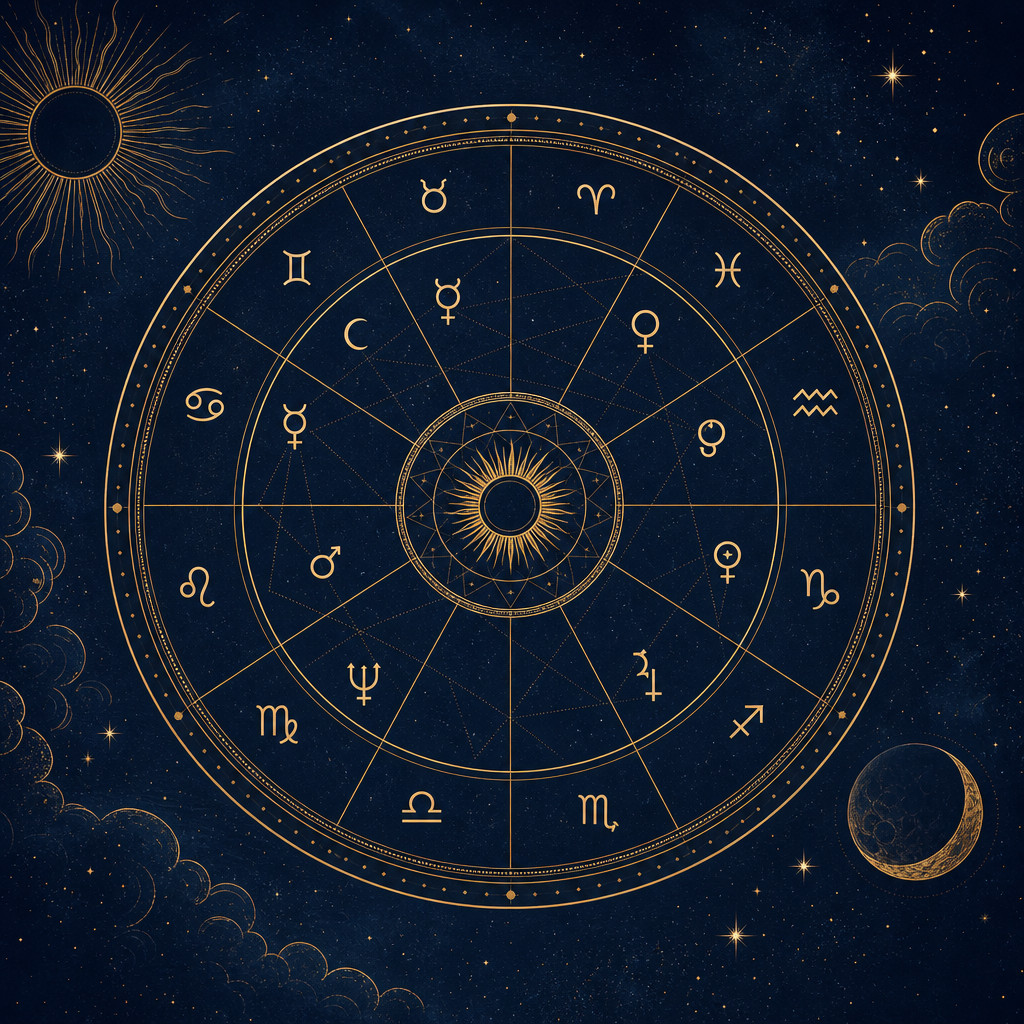
If you use astrology, you can locate the Full Moon by zodiac sign and natal house. This adds a personalized symbolic layer to the reflection.
The zodiac sign describes the archetypal style or theme, while the natal house suggests the life area where you may choose to focus your questions. Accurate house placement usually requires a reliable birth time and birthplace.
This does not mean a Full Moon in a particular house guarantees an event there. The house can simply provide a structured theme for self-review.
Full Moon Through the Twelve Houses
- 1st house: What has become clearer about identity, self-presentation, or personal direction?
- 2nd house: What do your recent choices reveal about money, resources, priorities, or self-worth?
- 3rd house: Which conversation, learning process, or communication pattern needs review?
- 4th house: What is happening in home, family, privacy, or emotional foundations?
- 5th house: What has developed in creativity, romance, pleasure, or self-expression?
- 6th house: Which routine, work process, or health-related habit needs adjustment?
- 7th house: What is becoming clearer in close partnerships and one-to-one relationships?
- 8th house: What shared resource, boundary, debt, vulnerability, or trust issue requires attention?
- 9th house: Which belief, study path, worldview, or travel plan is changing?
- 10th house: What is becoming visible in career, reputation, responsibility, or public direction?
- 11th house: Which friendship, community, collaboration, or long-term goal deserves review?
- 12th house: What needs rest, closure, privacy, or compassionate acknowledgment?
The Full Moon’s Zodiac Sign
The sign of the Full Moon can provide another layer of symbolism. An Aries Full Moon may bring reflection to independence, initiative, and direct action. Taurus can emphasize stability, resources, comfort, and values. Gemini may focus on communication, information, and flexibility. Cancer can highlight emotional security, home, and belonging.
Leo may emphasize creativity, recognition, pride, or self-expression; Virgo routines, organization, service, and improvement; Libra fairness, compromise, and relationships; Scorpio trust, intimacy, shared resources, and transformation.
Sagittarius can draw attention to beliefs, exploration, and long-term perspective; Capricorn to responsibility, structure, and achievement; Aquarius to community, individuality, and future-oriented thinking; Pisces to imagination, compassion, rest, and emotional boundaries.
These are broad archetypes, not guaranteed events.
Why Full Moons Oppose the Sun
Astrologically, every Full Moon occurs with the Sun and Moon in opposite zodiac signs. This opposition is often interpreted as a need to notice two competing or complementary perspectives.
For example, a Full Moon across Aries and Libra may raise symbolic questions about independence versus partnership. Taurus and Scorpio may suggest security versus shared vulnerability. Gemini and Sagittarius can contrast immediate information with broader meaning.
This polarity can be used as a reflection exercise: where are you overemphasizing one side and neglecting the other?
A Practical 15-Minute Full Moon Reflection
- Minutes 1–3: Review what has changed since the New Moon.
- Minutes 4–6: Write down one thing that feels complete or clearer.
- Minutes 7–9: Identify one emotionally charged situation and separate facts from assumptions.
- Minutes 10–12: Decide what to continue, adjust, or release.
- Minutes 13–14: Choose one concrete next action.
- Minute 15: Schedule a date to revisit the issue.
This structure keeps the Full Moon practice simple enough to repeat every month.
Full Moon Journaling Prompts
- What has become more visible recently?
- What am I proud of completing?
- What result surprised me?
- Which emotion has been strongest lately?
- What information is that emotion giving me?
- What am I ready to stop forcing?
- What deserves more patience?
- Which assumption needs to be tested?
- What boundary needs clarification?
- What is the next realistic action?
Full Moon Rituals: What Is Actually Useful?
Many Full Moon rituals include candles, meditation, crystals, baths, written release lists, Tarot cards, or time outdoors. These practices can be meaningful if they help you slow down and reflect.
They do not need to be treated as mechanisms that remove problems or guarantee change. Burning a piece of paper can symbolize closure, but the practical change still comes from what you do afterward.
If you choose any ritual involving candles or fire, use normal safety precautions.
Using Tarot During the Full Moon
Tarot can be incorporated as a reflective tool. Rather than asking for certainty, use open-ended questions such as:
- What am I seeing more clearly now?
- What deserves closure?
- What should I continue developing?
- What emotional pattern deserves attention?
A card can then serve as a prompt for journaling rather than a fixed prediction.
Full Moon and Sleep
Some studies have explored possible relationships between lunar phases and sleep, but findings have been mixed and the effects—when observed—are not strong enough to assume that every person sleeps differently during the Full Moon.
If you notice poor sleep around a Full Moon, track it over several months along with bedtime, caffeine, alcohol, stress, screen use, temperature, and other relevant factors. A simple record is more informative than assuming the Moon is the only cause.
Full Moon and Emotional Intensity
Popular culture often connects the Full Moon with extreme behavior. Large claims about universally increased aggression, emergencies, or psychiatric crises are not consistently supported by high-quality evidence.
That does not invalidate your personal experience. It simply means an individual pattern should not be generalized into a universal rule.
If Full Moon reflection helps you become more aware of emotions, use that awareness constructively: sleep enough, slow down important decisions if needed, communicate clearly, and seek appropriate support when emotions become difficult to manage.
Do You Need to Do Anything at the Exact Full Moon Time?
No. If your purpose is reflection, you do not need to perform a ritual at the exact astronomical minute. The evening before, the day of, or the following day can all function as practical reflection windows.
Astrological traditions differ about exact timing, but personal consistency is often more useful than precision that creates stress.
What If the Full Moon Feels Uncomfortable?
Reflection sometimes brings attention to disappointment, grief, conflict, uncertainty, or fatigue. You do not need to turn every Full Moon into a celebration of achievement.
A constructive reflection may be as simple as acknowledging, “This did not go as planned,” identifying what is still within your control, and choosing one supportive action.
If emotional distress is persistent or severe, astrology and lunar rituals are not substitutes for qualified mental health or medical care.
Common Full Moon Mistakes
Assuming every strong emotion is lunar. Consider other causes before making conclusions.
Turning symbolism into certainty. Use astrology as a reflective framework, not proof of future events.
Releasing things impulsively. Not every uncomfortable situation should be abandoned immediately.
Expecting instant completion. Some projects naturally require several lunar cycles.
Ignoring progress. Reflection should include what is working, not only what needs fixing.
Making the ritual too complicated. A notebook and fifteen minutes can be enough.
Frequently Asked Questions
What is the spiritual meaning of a Full Moon?
Many spiritual traditions associate the Full Moon with illumination, completion, emotional awareness, gratitude, and release. These are symbolic interpretations rather than scientific facts.
What should I do during a Full Moon?
You can review progress, journal, reflect on emotions, complete small unfinished tasks, clarify boundaries, or decide what to continue and what to change.
Should I release things during the Full Moon?
You can use the Full Moon as a reminder to let go of habits, assumptions, or commitments that no longer help you. Avoid making major irreversible decisions solely because of lunar timing.
Can a Full Moon affect my emotions?
Some people report personal patterns, but there is no strong evidence that the Full Moon causes the same emotional effect in everyone. Track your own experience alongside other relevant factors.
What does a Full Moon mean in astrology?
Astrologically, it is often interpreted as culmination, increased visibility, tension between two zodiac signs, and a point of awareness or review.
What house is the Full Moon in for me?
You need the Full Moon’s zodiac degree and your natal chart. Accurate house placement generally requires a reliable birth time and birthplace.
Is the Full Moon a good time to manifest?
If manifestation means clarifying goals and reviewing progress, it can be a useful symbolic checkpoint. If it means that lunar timing guarantees external outcomes, there is no established scientific evidence for that claim.
Final Takeaway
The Full Moon can be used as a practical monthly checkpoint for reflection, completion, and emotional awareness. Its astronomical reality is clear; its astrological meaning is symbolic and interpretive.
A grounded practice asks useful questions rather than demanding predictions. What has become clearer? What is complete? What still needs work? Which emotions contain information? What can you release without acting impulsively? What should you keep doing?
If astrology is meaningful to you, use the Full Moon’s zodiac sign and natal house to organize those questions. If not, you can still use the lunar cycle as a recurring reminder to pause and review.
The most useful Full Moon practice does not require certainty, dramatic rituals, or perfect timing. It requires attention, honesty, and one realistic next step.