

The short answer
In astrology, the twelve houses describe the life areas where a birth chart’s planets, signs, and aspects are expressed. Rather than defining personality on their own, houses provide context: a planet in the seventh house is read through relationships, while that same planet in the tenth concerns public direction. Your birth time matters because it establishes the house pattern and rising sign. Houses are symbolic tools within an interpretive tradition, not scientifically proven predictors of events or character.
To begin, locate the house containing a planet, identify the sign on that house’s cusp, then consider the planet’s condition and major aspects. A complete reading connects these layers rather than treating one placement as a verdict. If your birth time is unknown, house placements can be unreliable, especially near a cusp.
What houses are and how they work
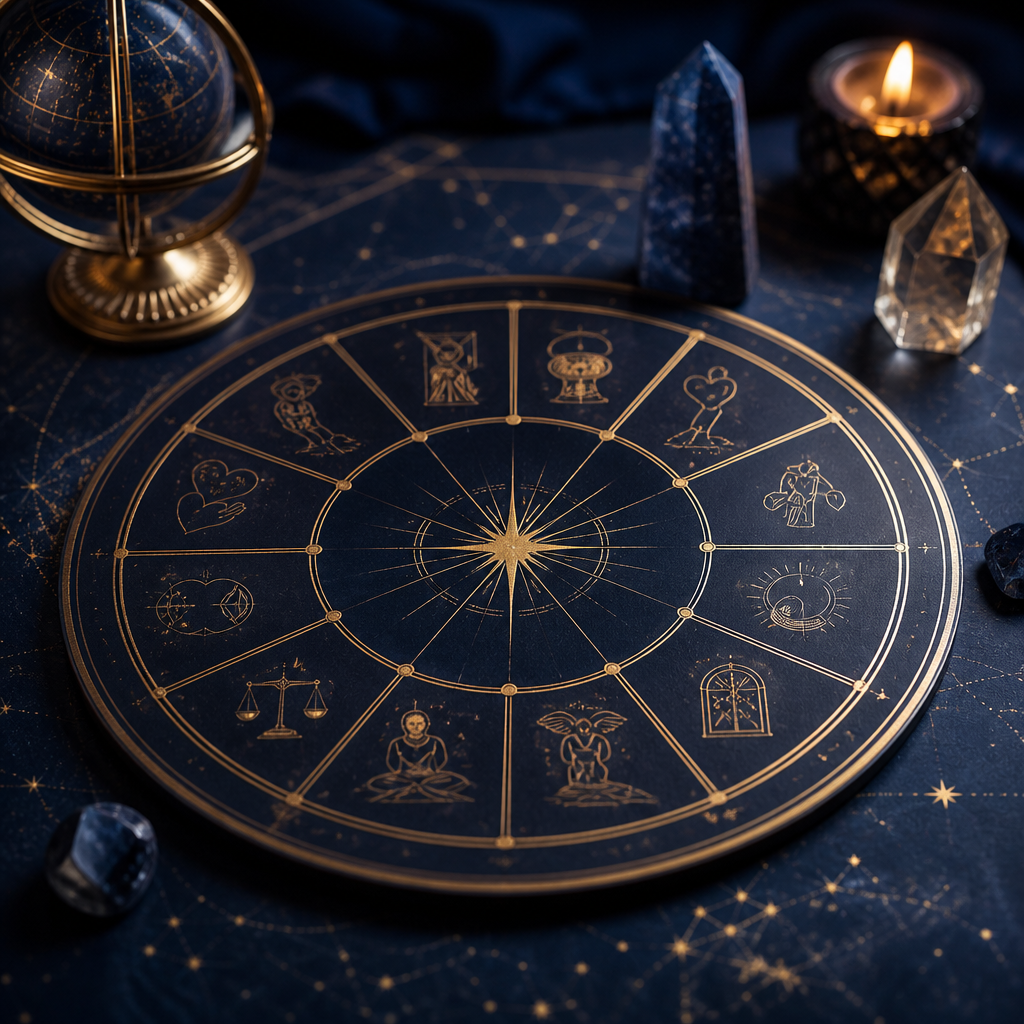
A natal chart is divided into twelve houses, beginning at the Ascendant, or rising sign, on the eastern horizon at the moment of birth. The houses progress counterclockwise around the chart. Each house has a cusp, its starting boundary, and may contain planets. Signs describe a placement’s style; planets describe its function or drive; houses describe the setting in which that energy is traditionally interpreted. Empty houses are not empty life areas: their cusp sign and ruling planet are still considered.
House systems and cusps
Different house systems divide the chart differently. Placidus is widely used in modern Western astrology, while Whole Sign houses place each entire sign in one house. Neither choice should be treated as a universal correction. When comparing systems, note what remains consistent, check whether a planet changes houses, and use the approach that best fits the reading tradition you are studying. A planet close to a cusp may deserve especially careful, nonabsolute interpretation.
The twelve astrological houses
The following meanings are common starting points in contemporary Western natal astrology. They are broad themes, not promises. The planet, sign, ruler, aspects, and the chart as a whole refine any house interpretation.
First house: self and presence
The first house concerns appearance, embodiment, immediate approach, and the way someone meets new situations. The Ascendant begins this house. Planets here can be noticeable in self-presentation, but they do not define a person’s entire identity.
Second house: resources and values
The second house addresses personal resources, possessions, skills, earning patterns, and values. It can describe attitudes toward security and self-worth. It is not a fixed forecast of income or material success.
Third house: learning and exchange
The third house covers everyday communication, early learning, local travel, siblings, neighbors, and practical information. It shows how exchanges and routines may be approached, rather than measuring intelligence or guaranteeing family experiences.
Fourth house: home and foundations
The fourth house relates to home, private life, roots, family stories, and emotional foundations. Interpretations vary across cultures and biographies. This house need not refer only to a physical house or childhood.
Fifth house: creativity and pleasure
The fifth house is associated with creative expression, play, romance, hobbies, and children. It describes a space for joy and personal expression. It should not be used to predict fertility, parenting outcomes, or romantic certainty.
Sixth house: routines and care
The sixth house concerns daily work, habits, service, practical responsibilities, and health routines. It may invite reflection on sustainable systems and support. It cannot diagnose illness or replace qualified medical care.
Seventh house: partnerships and relating
The seventh house focuses on one-to-one partnerships, agreements, collaboration, and projection. It includes romantic and business relationships. Read it as a lens on relating, not a guarantee of marriage, conflict, or a particular partner.
Eighth house: sharing and depth
The eighth house is traditionally linked with shared resources, intimacy, debts, inheritance, loss, and psychological depth. Its symbolism can feel intense, yet it is not evidence of danger or inevitable transformation.
Ninth house: perspective and exploration
The ninth house explores higher learning, belief systems, publishing, long-distance travel, and meaning-making. It can show a person’s relationship with broader perspectives. It does not prove religion, education level, or travel outcomes.
Tenth house: direction and reputation
The tenth house concerns vocation, reputation, visibility, responsibility, and long-term direction. The Midheaven often relates to its public themes. It describes a symbolic orientation toward contribution, not a predetermined career title or status.
Eleventh house: community and hopes
The eleventh house addresses friends, communities, networks, collective goals, and hopes for the future. It can illuminate how someone participates in groups. It should not be read as a scorecard for popularity or social belonging.
Twelfth house: rest and inner life
The twelfth house is often associated with solitude, rest, dreams, hidden patterns, institutions, and inner life. Some traditions emphasize what is difficult to see clearly. Avoid turning this symbolism into claims about secrets, sabotage, or fate.
How to read the houses in practice
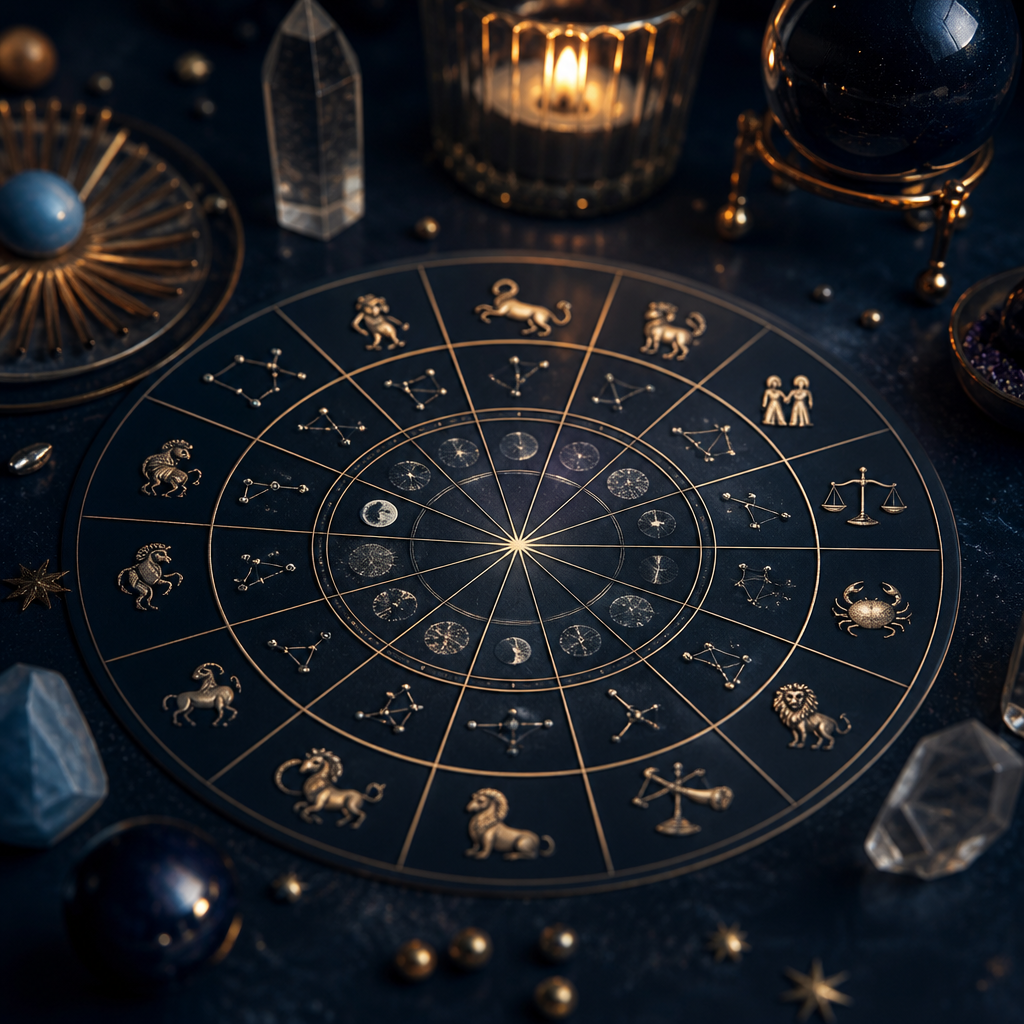
Start with one house and follow a simple sequence. First, note the life area. Next, identify the sign on the cusp and its traditional ruling planet. Then examine planets inside the house and their major aspects. For example, Venus in the sixth house may be discussed through preferences around daily harmony, work relationships, or routines; the sign and aspects add nuance. Compare repeated themes before drawing conclusions, and leave room for lived experience.
A practical checklist
- Read the house topic before assigning a specific event.
- Check the cusp sign and the condition of its ruler.
- Consider planets in the house, then major aspects to them.
- Compare several placements; one symbol rarely tells the whole story.
Frequently asked questions
Do houses equal zodiac signs?
No. The zodiac signs are twelve symbolic styles, while houses are twelve chart sectors tied to place and time. In Whole Sign houses they align by sign boundaries, but their meanings remain distinct.
What does an empty house mean?
An empty house does not mean that area is missing or unimportant. Readers usually examine the sign on its cusp, the house ruler, and transits or other techniques within their chosen tradition.
Can house meanings change?
The basic house topics stay relatively stable within a system, but interpretation changes with chart context, technique, and life experience. Timing methods may focus attention on different themes without making outcomes certain.
Explore your chart with context
A birth chart becomes more useful when you connect houses with planets, signs, and aspects. Use your chart as a reflective map, then explore zodiac sign meanings to deepen the language you use.
Responsible use
Astrology can offer a vocabulary for reflection, but it is not a scientific method for establishing personality, health, compatibility, or future events. Keep decisions about medicine, money, legal matters, and safety grounded in qualified advice and observable evidence. If an interpretation creates anxiety or removes your sense of choice, pause, seek perspective, and treat it as optional symbolism rather than fact.
Related Astrology Guides
- What Is a Birth Chart?
- How to Read a Birth Chart
- Astrology Houses Explained
- The Planets in Astrology
- Astrology Aspects Explained
Conclusion
The twelve houses give astrology a practical map of life topics, from identity and resources to community and inner life. Begin with the Ascendant, read each house through its cusp sign, ruler, and planets, and compare the patterns that repeat. Remember that a chart is interpreted as a whole. For a stronger foundation, learn the basics of your birth chart and zodiac signs alongside house meanings. This measured approach keeps astrology exploratory, personal, and open to revision as your understanding grows over time.